






What's Happening?
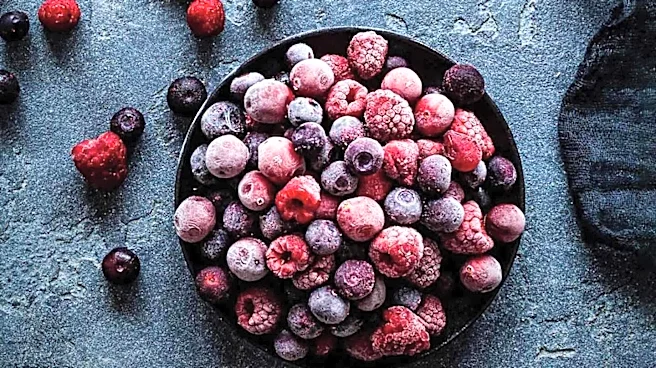
Publix has initiated a recall of thousands of units of its frozen organic blueberries and mixed berries across eight U.S. states due to potential E. coli contamination. The U.S. Food and Drug Administration (FDA) has classified this as a Class I recall,
which is its highest warning level, indicating a reasonable probability that consuming these products could lead to serious adverse health consequences or death. The recall, initially started by Publix on June 25, includes 10-oz. and 48-oz. packages of Organic Whole Blueberries and Organic Whole Mixed Berries with specific UPCs and expiration dates before February 9, 2028. The affected states are Alabama, Florida, Georgia, Kentucky, North Carolina, South Carolina, Tennessee, and Virginia. The FDA is investigating an E. coli outbreak linked to these products, which has so far affected 11 people in Florida and one in Georgia, resulting in four hospitalizations.
Why It's Important?
This Class I recall is critically important due to the severe health risks associated with E. coli contamination, which can cause severe stomach cramps, diarrhea, vomiting, and in vulnerable populations, hemolytic uremic syndrome (HUS) leading to kidney failure. The widespread distribution across eight states means a significant number of consumers could be at risk. For the food industry, this incident highlights the ongoing challenges of food safety and the critical need for robust supply chain management and quality control. Recalls of this magnitude can lead to substantial financial losses for retailers and suppliers, damage brand reputation, and erode consumer trust. Public health agencies face the challenge of quickly identifying contaminated products and effectively communicating risks to prevent further illness, emphasizing the importance of rapid response systems.
What's Next?
Publix has advised customers not to consume the recalled products and to either discard them or return them for a refund. The company stopped selling the items by the end of June, and they remain unavailable for sale. The FDA's investigation into the E. coli outbreak is ongoing, and consumers who have purchased these products are urged to sanitize any areas the berries may have touched to prevent cross-contamination. Further actions may include additional product testing, enhanced inspections of the supplier (Frutas y Hortalizas del Sur S.A. in Chile), and potential updates to food safety protocols within Publix and its supply chain. The focus will remain on containing the outbreak and ensuring public safety.
Beyond the Headlines
This recall extends beyond immediate health concerns, touching upon the complexities of global food supply chains and the increasing reliance on imported produce. The fact that the initial recall was by the supplier in Chile, followed by Publix's broader action, underscores the interconnectedness of international food production and distribution. It raises questions about the efficacy of international food safety standards and inspection processes for imported goods. Ethically, companies have a profound responsibility to ensure the safety of their products, and incidents like this can prompt a re-evaluation of sourcing practices and supplier vetting. Culturally, such events can heighten consumer awareness and demand for transparency regarding food origins and safety, potentially influencing purchasing habits towards locally sourced or more rigorously certified products in the long term.