


What's Happening?
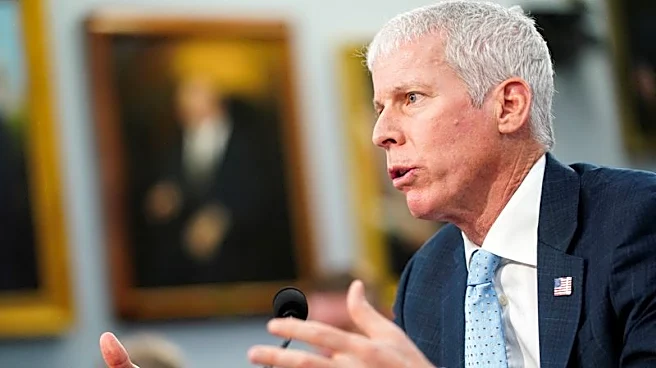
U.S. Representative Tracey Mann (R-KS), alongside a bipartisan group of lawmakers, has introduced the Build American Efficiency Act. This legislation aims to encourage the Department of Housing and Urban Development (HUD) to recognize auditable and verifiable
systems, such as the 'Make It American' program, when assessing compliance for federally funded housing projects. The primary goal of this act is to reduce administrative burdens, including duplicative paperwork, uncertainty in regulations, and the need for frequent waiver requests. The 'Make It American' program, developed by the National Electrical Manufacturers Association (NEMA), is a third-party certification system that independently evaluates manufacturers against specific process standards and 'Build America, Buy America Act' (BABA) requirements. This program helps manufacturers, contractors, and public agencies navigate domestic-content requirements for federally funded infrastructure projects by providing a clear and consistent method for demonstrating compliance. The legislation seeks to extend this streamlined approach to housing projects, building on similar momentum seen in transportation infrastructure.
Why It's Important?
The introduction of the Build American Efficiency Act is significant for several reasons. It addresses a critical challenge faced by manufacturers and contractors involved in federally funded projects: the complexity and inconsistency of domestic content compliance. By promoting the recognition of standardized certification programs like 'Make It American,' the act could significantly reduce the administrative overhead and associated costs for businesses. This streamlining could encourage more U.S. manufacturers to participate in federal housing projects, thereby strengthening domestic manufacturing and job creation. For the Department of Housing and Urban Development, adopting such systems could lead to more efficient project oversight and a clearer framework for ensuring that federal funds support American-made products. Ultimately, this legislation aims to make the 'Buy America' provisions more effective and less burdensome, fostering greater investment in U.S. infrastructure and manufacturing capabilities across various sectors, including housing.
What's Next?
The Build American Efficiency Act will now proceed through the legislative process in Congress. Its bipartisan support suggests a potential for advancement, similar to the House Transportation and Infrastructure Committee's recent approval of the bipartisan BUILD America 250 Act, which included similar language regarding the 'Make It American' Process Standard for transportation projects. Stakeholders, including NEMA and its member manufacturers, will likely advocate for its passage, highlighting the benefits of reduced compliance complexities and increased domestic manufacturing. If enacted, HUD would be encouraged to integrate such verifiable systems into its compliance procedures for housing projects. This could lead to a more standardized and transparent approach to domestic content requirements, potentially influencing other federal agencies to adopt similar frameworks for their respective infrastructure and development initiatives. The focus will be on how quickly and effectively these streamlined processes can be implemented to support U.S. manufacturing and job growth.
Beyond the Headlines
Beyond the immediate goal of streamlining compliance, the Build American Efficiency Act reflects a broader national push towards reinforcing domestic supply chains and manufacturing capabilities. The 'Build America, Buy America Act' (BABA) itself was a response to concerns about the reliance on foreign goods in critical infrastructure projects. This new legislation, by making compliance easier, aims to operationalize the intent of BABA more effectively. It highlights a growing consensus that investing in U.S. manufacturing is not just a policy preference but a practical necessity for national economic resilience and security. The act also underscores the role of industry-led certification programs in bridging the gap between legislative mandates and practical implementation. By empowering third-party verification, it seeks to create a trusted ecosystem where both government agencies and private sector entities can confidently ensure adherence to domestic content requirements, fostering a more robust and self-reliant American industrial base.