
What's Happening?
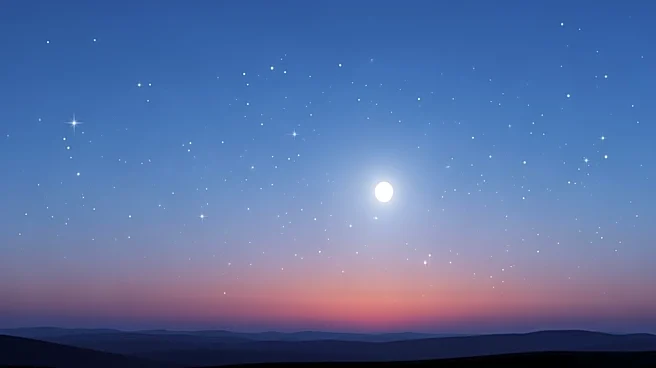
Venus, often referred to as the 'Evening Star,' is currently visible in the western sky shortly after sunset. This celestial event occurs as Venus reflects sunlight, making it the brightest object in the sky after the moon.
Positioned east of the sun, Venus will continue to climb higher and shine more intensely throughout the summer, reaching peak brightness by mid-September. This phenomenon is part of Venus's synodic cycle, which lasts approximately 584 days, alternating between its appearances as the 'Morning Star' and the 'Evening Star.' Observers can enjoy this spectacle without any special equipment, although binoculars or a telescope can enhance the view.
Why It's Important?
The visibility of Venus as the 'Evening Star' offers a unique opportunity for both amateur and professional astronomers to observe one of the most brilliant celestial bodies in our solar system. This event not only captivates sky watchers but also provides educational opportunities to learn about planetary movements and the synodic cycles of celestial bodies. The phenomenon underscores the beauty and complexity of our solar system, fostering a greater appreciation for astronomy and science.
What's Next?
As Venus continues its journey, it will gradually transition from the 'Evening Star' to the 'Morning Star' by October. This shift will mark a new phase in its synodic cycle, offering another chance for observation and study. Astronomers and enthusiasts will likely continue to track Venus's movements, providing insights into its behavior and characteristics.