



What's Happening?
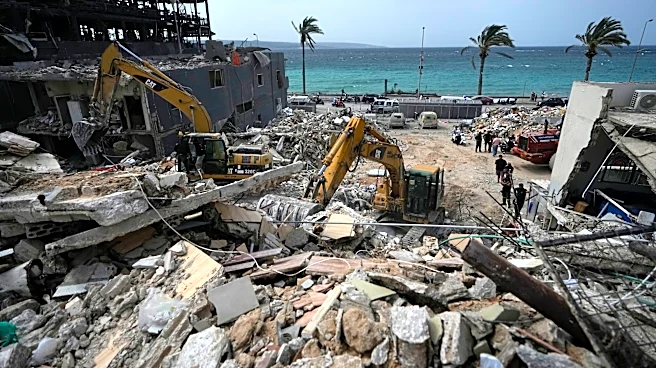
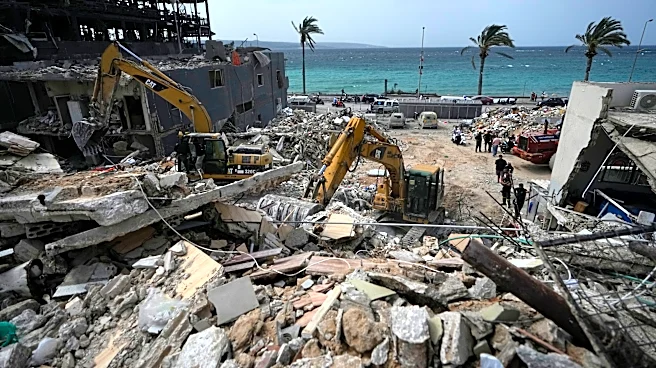
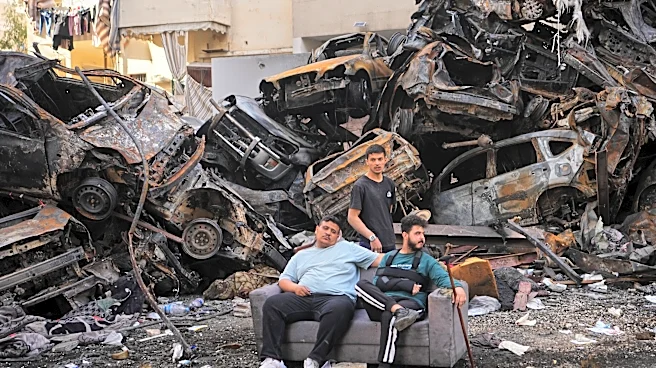
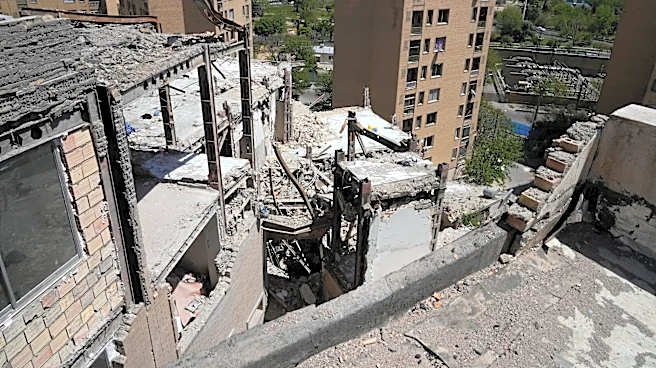
Following a ceasefire between Israel and Hezbollah, displaced Lebanese residents are returning to their villages. Photographs depict the aftermath of the conflict, with residents navigating through rubble and damaged infrastructure in areas like Dahiyeh,
Beirut's southern suburbs, and Kfar Roumman in southern Lebanon. The images highlight the resilience of the Lebanese people as they return to their homes, despite the destruction caused by Israeli airstrikes. The ceasefire, which took effect on April 17, 2026, has allowed for a temporary pause in hostilities, enabling civilians to assess the damage and begin the process of rebuilding.
Why It's Important?
The return of displaced residents to their homes is a critical step in the recovery process following the conflict between Israel and Hezbollah. The ceasefire provides a window of opportunity for humanitarian aid and reconstruction efforts to take place. However, the extensive damage to infrastructure and homes poses significant challenges for returning residents. The international community's response, including aid and support for rebuilding efforts, will be crucial in ensuring a sustainable recovery. The situation also underscores the ongoing tensions in the region and the need for a long-term resolution to prevent future conflicts.
What's Next?
As residents return, the focus will shift to rebuilding and providing essential services to affected communities. International aid organizations and the Lebanese government will play a key role in supporting these efforts. The ceasefire's durability remains uncertain, and any violations could lead to renewed hostilities. Diplomatic efforts may be necessary to address the root causes of the conflict and ensure a lasting peace. Monitoring the situation closely will be important to prevent further displacement and suffering among the civilian population.