
What's Happening?
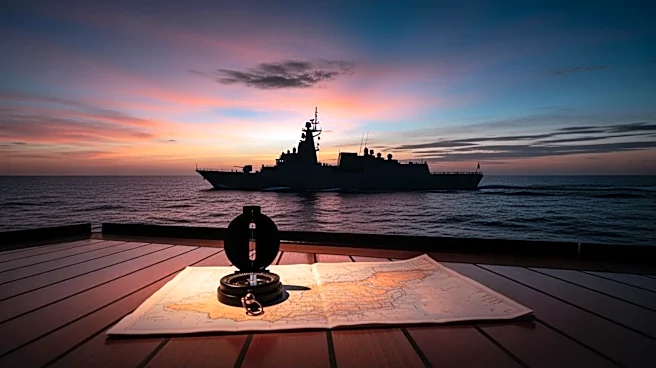
China's military has been conducting increasingly sophisticated naval exercises near Taiwan, simulating scenarios such as naval blockades, air incursions, and amphibious landings. A recent analysis by
scholars at the U.S. Naval War College highlights a shift towards more realistic and operationally grounded rehearsals for a potential invasion of Taiwan. The exercises, which took place last fall, involved large-scale, coordinated operations across multiple locations, reflecting a strategic focus on Taiwan's geography. The drills included the use of civilian roll-on/roll-off vessels and amphibious armored vehicles, with the PLA Navy employing new tactics such as navigating through aquaculture rafts, which are common near Taiwan's shores. This development comes amid concerns within the Pentagon about the U.S.'s ability to defend Taiwan, given current stock levels of critical interceptors and munitions.
Why It's Important?
The increased realism and scale of China's military exercises near Taiwan underscore the growing tension in the region and the potential for conflict. These developments are significant for U.S. defense policy, as they highlight the need for readiness in the face of a possible Chinese attempt to seize Taiwan. The exercises suggest that China is enhancing its capability to conduct large-scale, coordinated military operations, which could challenge U.S. and allied forces in the region. The Pentagon's concerns about interceptor and munition stock levels further complicate the U.S.'s strategic position, potentially impacting its ability to deter or respond to Chinese aggression. This situation could influence U.S. military planning and resource allocation, as well as diplomatic efforts to manage tensions in the Asia-Pacific region.
What's Next?
The U.S. may need to reassess its military preparedness and stockpile levels to ensure it can effectively respond to any future Chinese actions against Taiwan. This could involve increasing production of critical munitions and interceptors, as well as enhancing military cooperation with allies in the region. Diplomatic efforts may also intensify to address the growing threat and to seek peaceful resolutions to the Taiwan issue. Additionally, the U.S. might engage in more frequent and visible military exercises with allies to demonstrate its commitment to defending Taiwan and maintaining stability in the region.