





What's Happening?
The Saamaka community in Suriname is employing modern technology, including satellite imagery, GPS mapping, and patrols, to document and protect their ancestral lands in the Amazon rainforest from illegal logging and gold mining. Navaldo Vola, a Saamaka community member,
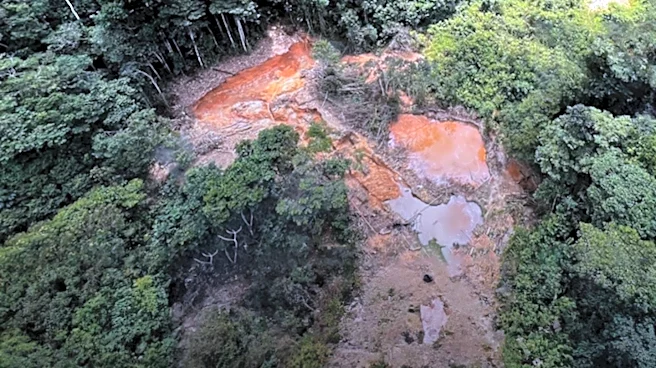
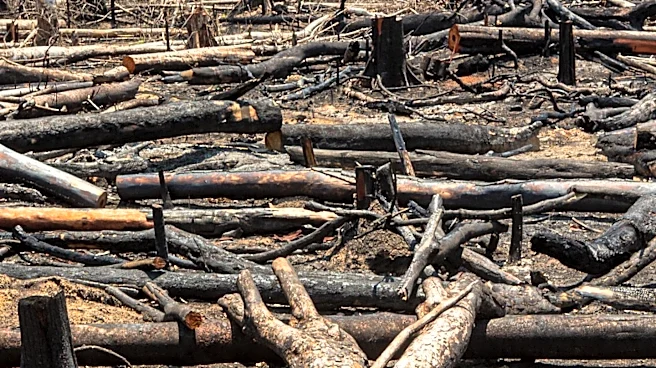
recently discovered an abandoned excavator and a makeshift camp believed to be used by Chinese loggers in a supposedly untouched area of Ebbatop mountain. This initiative, named Apaki, aims to gather evidence to support their claim for government recognition of their traditional forest management system. Despite an international court ruling nearly two decades ago ordering Suriname to recognize their collective land rights, this ruling remains largely unfulfilled. The community hopes that documenting these incursions will strengthen their case for legal protection of their territory. Suriname, a country with approximately 93% forest cover, pledged last year to protect 90% of its tropical forests and strengthen conservation laws, potentially including legal recognition of ancestral lands.
Why It's Important?
This development highlights the ongoing struggle of indigenous and tribal communities to protect their ancestral lands and the environment from exploitation. The Saamaka's use of technology to monitor and document illegal activities provides a model for other communities facing similar challenges. The lack of government recognition for their land rights, despite an international court ruling, underscores a significant gap in environmental protection and human rights. The destruction of these forests contributes to global climate change, as the Amazon rainforest is a critical carbon sink. The economic pressures driving illegal logging and mining, coupled with the potential for an offshore oil boom in Suriname, create complex challenges for conservation efforts and the well-being of the Saamaka people. The outcome of their efforts could set a precedent for how governments interact with indigenous communities regarding land rights and environmental stewardship.
What's Next?
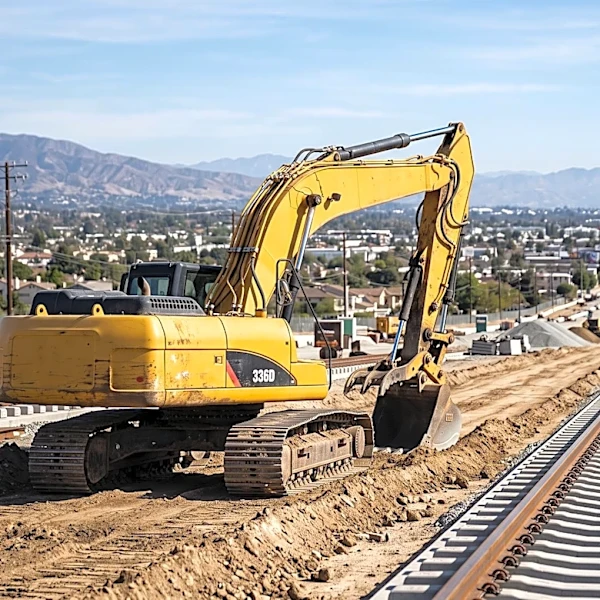
The Saamaka community will continue their efforts to map and document incursions into their territory, using this data to press for formal government recognition of their traditional forest management system. Talks between Saamaka leaders and the Surinamese government on forest protection are reportedly scheduled for October, with the government indicating it is updating its legal framework to allow for formally established community-protected areas. However, Hugo Jabini, managing director of the Association of Saamaka Communities, stated he is unaware of such plans. The community is also training young people to monitor the forest and collect data for complaints, negotiations, and legal action. The ongoing expansion of roads, like the Palmera road, will likely continue to open up previously inaccessible areas, increasing the urgency of their efforts. The potential for an offshore oil boom in Suriname also raises questions about future development and its impact on the forested interior.
Beyond the Headlines
The Saamaka community's struggle extends beyond environmental protection; it is a fight for cultural survival and self-determination. Their traditional agreements for forest use, passed down through generations, represent a sustainable model of resource management that contrasts sharply with the destructive practices of illegal logging and mining. The personal risks faced by advocates like Hugo Jabini, who received a death threat for challenging a gold-mining concession, underscore the dangerous environment in which these communities operate. The divisions within Saamaka communities, where some rely on gold mining for income, highlight the complex socio-economic factors at play. This situation reflects a broader global challenge where economic development often clashes with environmental conservation and indigenous rights, raising ethical questions about who benefits from resource extraction and who bears the cost.