





What's Happening?
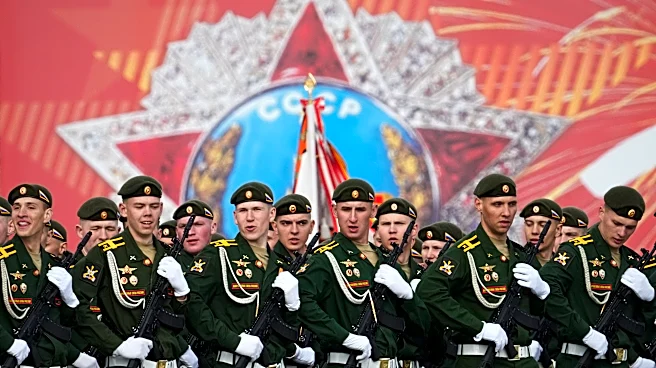
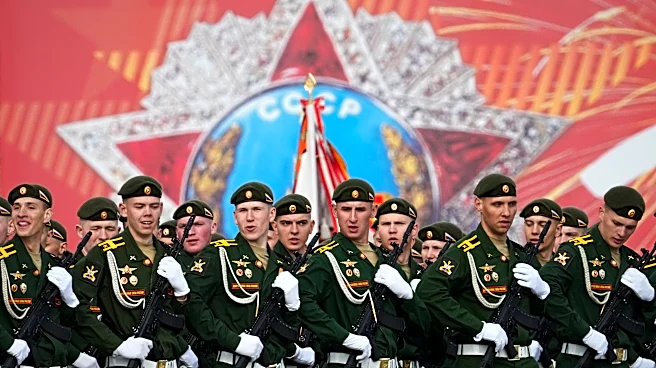
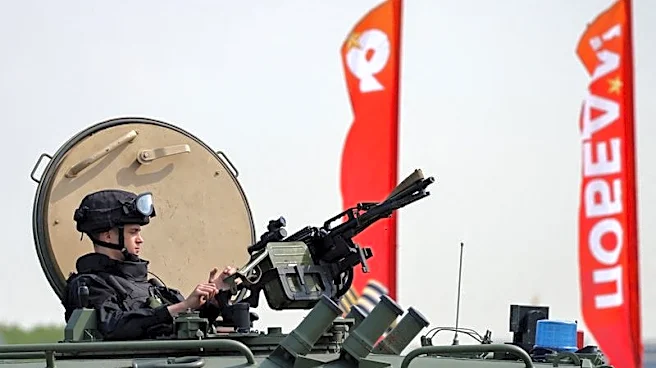
North Korean troops participated in Russia's Victory Day military parade in Moscow for the first time, as reported by Russia's Tass news agency. The parade, held in Red Square, featured North Korean soldiers marching in formation, carrying their national
flag and a banner commemorating Russia's Victory Day, which celebrates the Soviet victory over Germany in World War II. The presence of North Korean troops highlights the growing military relationship between North Korea and Russia. North Korean Ambassador to Russia, Sin Hong-chol, along with other officials, applauded the troops' participation. This event follows a strategic partnership treaty signed in June 2024 between North Korean leader Kim Jong-un and Russian President Vladimir Putin, which included the deployment of approximately 15,000 North Korean combat troops to support Russia. Kim Jong-un also sent a congratulatory message to Putin, reaffirming North Korea's commitment to strengthening ties with Russia.
Why It's Important?
The participation of North Korean troops in Russia's Victory Day parade signifies a deepening of military and diplomatic ties between North Korea and Russia. This development could have significant geopolitical implications, particularly in the context of international relations and security dynamics in the region. The strategic partnership between the two countries may influence the balance of power in Northeast Asia, potentially affecting U.S. foreign policy and its alliances in the region. The collaboration could also impact ongoing diplomatic efforts to address North Korea's nuclear ambitions, as stronger ties with Russia might embolden Pyongyang's stance in international negotiations. Additionally, this partnership may complicate the U.S.'s efforts to isolate North Korea economically and politically.
What's Next?
The strengthened military ties between North Korea and Russia could lead to further joint military activities or collaborations, potentially increasing tensions in the region. The U.S. and its allies may need to reassess their strategies in dealing with North Korea and Russia, considering the implications of this partnership. Diplomatic efforts may intensify to address the potential security threats posed by this alliance. Additionally, the international community might increase pressure on both countries through sanctions or diplomatic channels to deter further military cooperation. Monitoring the developments in this partnership will be crucial for understanding its impact on regional and global security.