



What's Happening?
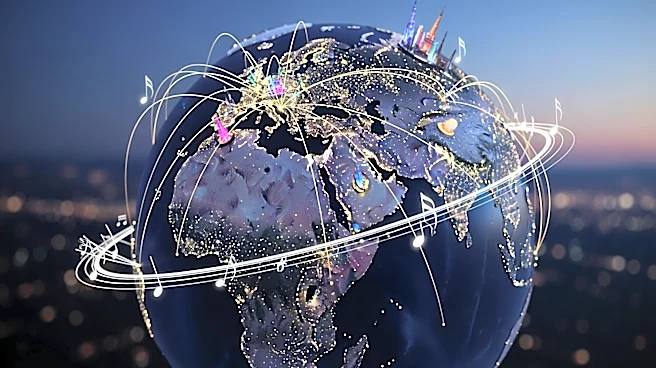
Korean culture, known as the 'Korean wave' or hallyu, is rapidly expanding across Latin America, influencing various aspects of life from music and television to food and fashion. This cultural phenomenon has seen significant growth in countries like
Mexico, Brazil, and Chile, where K-pop and Korean dramas have gained immense popularity. The demand for K-pop concerts, such as those by BTS, has led to additional tour dates being planned in major Latin American cities. Influencers and cultural figures from Korea are also making an impact, promoting Korean cuisine and lifestyle. This cultural exchange is seen as a form of soft power, enhancing Korea's global cultural footprint.
Why It's Important?
The rise of Korean culture in Latin America signifies a shift in global cultural dynamics, where the United States is no longer the primary cultural influencer. This change reflects broader geopolitical trends and the increasing appeal of Asian cultures. The popularity of Korean culture could lead to economic opportunities, such as increased tourism and cultural exchanges, benefiting both regions. Additionally, it highlights the potential for cultural diplomacy to strengthen international relations and foster mutual understanding between diverse populations.
What's Next?
As Korean culture continues to gain traction in Latin America, we can expect further integration of Korean cultural elements into local traditions. This may lead to more collaborative projects between Latin American and Korean artists, businesses, and cultural institutions. The growing interest in Korean language and studies suggests a deepening of cultural ties, which could result in more educational and cultural exchange programs. Stakeholders in both regions may explore ways to capitalize on this cultural trend to enhance economic and diplomatic relations.
Beyond the Headlines
The expansion of Korean culture in Latin America raises questions about cultural identity and globalization. It challenges traditional notions of cultural dominance and highlights the role of media and technology in shaping cultural perceptions. This phenomenon also underscores the importance of cultural diversity and the potential for cross-cultural collaboration to address global challenges. As Latin American societies embrace Korean culture, they may also reflect on their own cultural heritage and explore ways to integrate diverse influences into their cultural landscape.