


What's Happening?
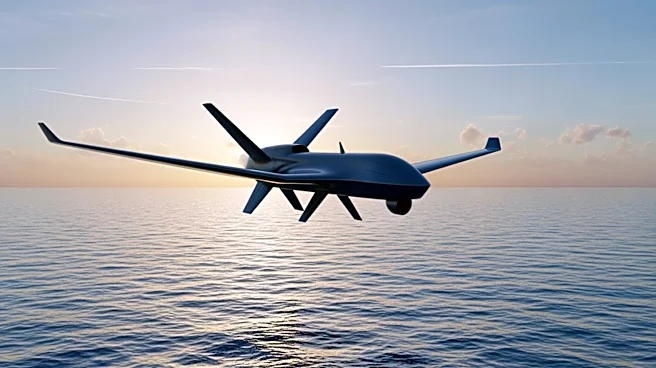
The Italian Navy is advancing its capabilities by integrating TB-3 strike drones onto its light carrier, ITS Cavour. These drones, originally developed in Turkey, are designed for long-endurance missions and can carry precision-guided missiles. The TB-3s
offer a significant operational enhancement by providing continuous wide-area surveillance and the ability to engage targets at a distance. This development follows the Turkish Navy's initial deployment of TB-3s on the TCG Anadolu, where they demonstrated effective take-offs and landings using an autonomous flight control system. The Italian TB-3s are being produced in collaboration with Leonardo and are expected to receive operational certification soon.
Why It's Important?
The integration of TB-3 drones into the Italian Navy represents a strategic shift towards more cost-effective and technologically advanced military operations. By leveraging these drones, the Italian Navy can maintain persistent surveillance and engage in asymmetric warfare, enhancing its operational readiness and flexibility. This move aligns with a broader trend in military innovation, where rapid, low-cost procurement is prioritized to adapt to changing warfare dynamics. The successful deployment of TB-3s could influence other navies to adopt similar technologies, potentially altering the balance of naval power and strategy.
What's Next?
The Italian Navy is expected to complete the operational certification of its TB-3 drones soon, which will enable full deployment on ITS Cavour. This advancement may prompt other European navies to consider similar technological upgrades, potentially leading to increased collaboration or competition in drone technology. The success of the TB-3s could also drive further investment in drone development and integration across various military platforms, influencing future naval strategies and procurement decisions.
Beyond the Headlines
The adoption of TB-3 drones by the Italian Navy highlights the growing importance of unmanned systems in modern warfare. This shift not only enhances military capabilities but also raises questions about the ethical and legal implications of drone warfare. As navies increasingly rely on autonomous systems, issues such as accountability, decision-making in combat, and the potential for unintended escalation must be carefully considered. The rapid pace of technological advancement in military applications underscores the need for updated international regulations and agreements to address these emerging challenges.