





What's Happening?
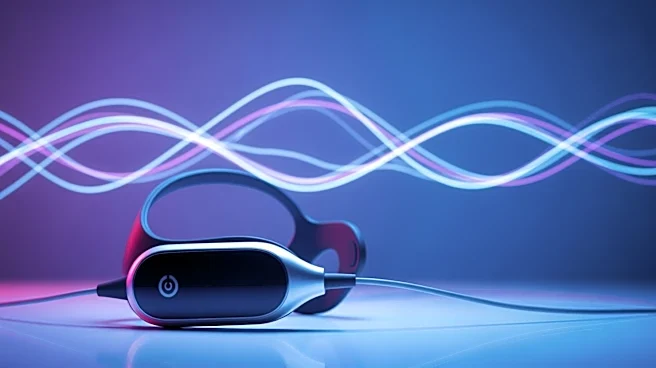
Recent research led by Chiara Cirelli at the University of Wisconsin–Madison suggests that inducing deep sleep wave activity in the brain while awake could offer some benefits of sleep without actual sleep. This involves using transcranial electrical
stimulation to mimic the slow-wave sleep activity typically seen during non-rapid eye movement (NREM) sleep. The study, conducted on mice, showed that stimulating specific brain activity while awake led to effects similar to deep sleep, such as improved memory. The researchers plan to explore whether similar effects can be achieved in humans. However, experts like Vladyslav Vyazovskiy emphasize that sleep, particularly the alternation between NREM and REM states, remains irreplaceable for complete restorative functions.
Why It's Important?
This research could have significant implications for individuals who struggle with sleep disorders or have demanding schedules that limit sleep. If successful in humans, this method could provide a way to achieve some restorative benefits of sleep without the need for extended sleep periods. This could potentially enhance productivity and well-being for those unable to get sufficient sleep. However, the research also highlights the complexity of sleep and the importance of both NREM and REM states, suggesting that while some benefits might be replicated, complete sleep cannot be replaced.
What's Next?
The research team plans to study the effects of inducing slow-wave sleep activity in humans using non-invasive methods like transcranial electrical stimulation. This could lead to new treatments for sleep disorders or ways to enhance cognitive function in sleep-deprived individuals. The outcomes of these studies could influence future sleep-related technologies and therapies.