





What's Happening?
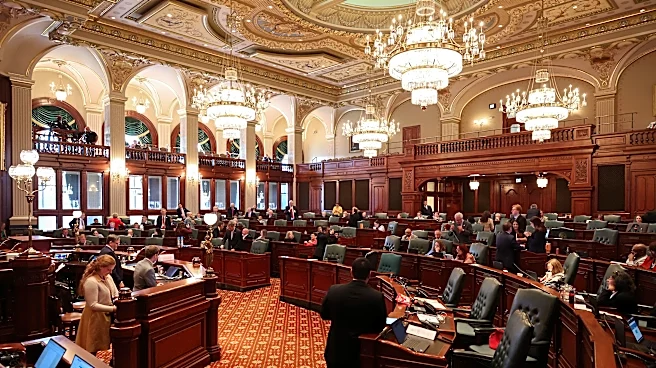
Illinois legislators have approved a nearly $56 billion budget for fiscal year 2027. The budget includes provisions such as an additional $350 million for K-12 education, meeting the minimum required under the 2017 evidence-based funding model. However,
it has raised concerns due to the lack of increased funding for comprehensive literacy programs, which remains at $1.5 million despite data showing that nearly 50% of early elementary students are reading below grade level. The budget also introduces over $900 million in new taxes, fees, and fund sweeps, while suspending a scheduled motor fuel tax increase. Governor JB Pritzker emphasized the budget's focus on lowering costs and investing in children, but critics argue it fails to address key educational deficiencies.
Why It's Important?
The budget's approval is significant as it reflects the state's priorities and fiscal strategies amidst ongoing economic challenges. The decision to maintain flat funding for literacy programs could have long-term implications for educational outcomes and social equity in Illinois. The introduction of new taxes and fees may impact residents and businesses, potentially affecting economic growth and public sentiment. The budget's passage without bipartisan support highlights political divisions and raises questions about the inclusivity and transparency of the legislative process. The focus on education funding and tax policies will likely influence public discourse and future policy decisions in the state.
What's Next?
As the budget moves forward, stakeholders will likely scrutinize its implementation and impact on various sectors. Educational advocates may push for increased funding and reforms to address literacy and proficiency gaps. The state's economic performance and public response to new taxes will be closely monitored, potentially influencing future legislative sessions. Lawmakers may face pressure to enhance transparency and inclusivity in the budget process, addressing criticisms of rushed decision-making. The budget's outcomes could shape political dynamics and policy priorities in Illinois, particularly in the lead-up to future elections.