





What's Happening?
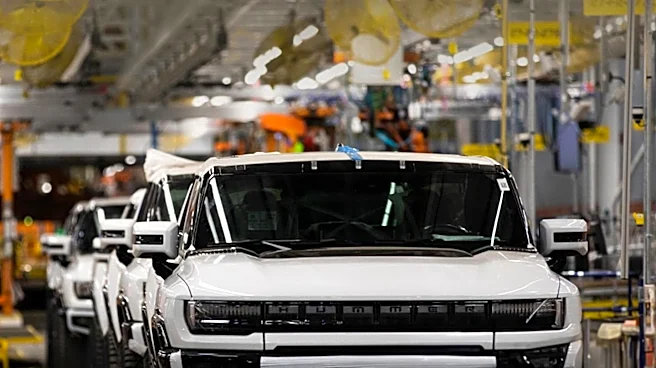
The U.S. is reportedly losing its global dominance to China, particularly in the fields of technology and manufacturing. According to Evan Osnos, China has surpassed the U.S. in producing electric vehicles, solar cells, and lithium-ion batteries. The Chinese
company BYD has overtaken Tesla as the largest electric vehicle manufacturer. China's strategic use of artificial intelligence in factories has allowed it to reduce production costs and compete globally, even in the face of U.S. tariffs. This shift raises questions about the future of American global leadership and its ability to compete with China's growing influence.
Why It's Important?
China's advancements in technology and manufacturing have significant implications for global economic and political dynamics. As China continues to expand its influence, the U.S. faces challenges in maintaining its leadership position. The shift in dominance could impact U.S. industries, particularly those reliant on technological innovation and manufacturing. The situation also highlights the need for the U.S. to reassess its strategies in technology development and international trade to remain competitive. The potential decline in U.S. influence could affect global alliances and economic policies.
Beyond the Headlines
The growing competition between the U.S. and China extends beyond economics, influencing geopolitical strategies and international relations. China's ability to leverage technology for economic growth could inspire other nations to adopt similar approaches, potentially reshaping global power structures. The U.S. may need to address internal challenges, such as investment in education and research, to foster innovation and maintain its competitive edge. The situation underscores the importance of strategic planning and international cooperation in navigating the complexities of global power shifts.