





What's Happening?
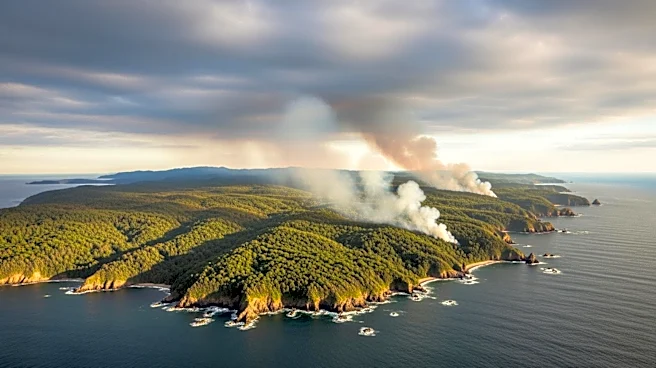
A fire on Santa Rosa Island, part of the Channel Islands, has expanded to over 10,000 acres, threatening unique plant species and wildlife. The blaze, which began on the south side of the island, destroyed a cabin and an equipment shed, leading to the evacuation
of 11 National Park Service employees. The fire, first detected by an aircraft, grew significantly over the weekend. Currently, 70 firefighters and park rangers are working to contain the fire, which poses a risk to six plant species unique to the island, as well as animals like island foxes and spotted skunks. Smoke from the fire has spread across the Los Angeles area and is expected to continue affecting air quality through Tuesday. The fire's cause is under investigation, but it is believed to be human-caused.
Why It's Important?
The fire on Santa Rosa Island is significant due to its impact on the island's unique ecosystem. The island hosts several plant species that are not found anywhere else, making the fire a critical threat to biodiversity. Additionally, the island is home to various wildlife species, including the island fox, which could face habitat loss. The fire also highlights the challenges of managing natural resources and protecting endangered species in the face of human activities. The spread of smoke to the Los Angeles area underscores the broader environmental impact, affecting air quality and public health in the region.
What's Next?
Efforts to contain the fire will continue, with firefighters and park rangers working to prevent further damage to the island's ecosystem. The investigation into the fire's cause may lead to increased measures to prevent human-caused fires in the future. The National Park Service may also implement additional protective measures for the island's unique species. As the fire is not yet contained, ongoing monitoring of air quality in the Los Angeles area will be necessary to protect public health.