






What's Happening?
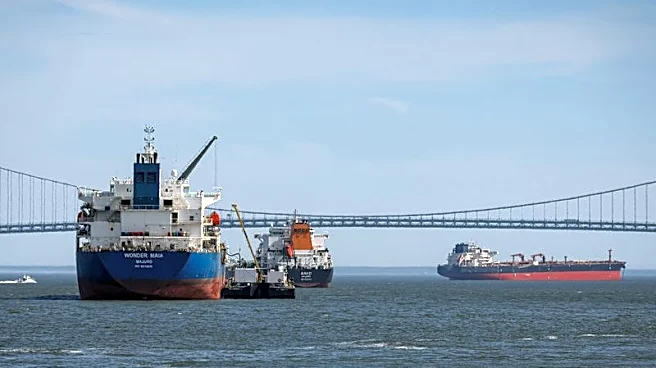
Iraq has resumed its southern oil exports after a month-long halt caused by disruptions in shipping through the Strait of Hormuz. The Malta-flagged tanker Agios Fanourios 1 has anchored near Iraq's southern oil terminals and is expected to load approximately
2 million barrels of Basra crude. The vessel entered the Gulf on Wednesday, marking its second attempt to transit the waterway after being among several tankers that tried to enter during the U.S.-Iran ceasefire. According to shipping data and trade sources, another tanker is expected to arrive at the southern export terminals within two days. The resumption of exports comes amid a U.S.-mediated ceasefire between Israel and Lebanon, which has opened the Strait of Hormuz to commercial vessels for the remaining days of the ceasefire.
Why It's Important?
The resumption of Iraq's southern oil exports is significant for global oil markets, as disruptions in the Strait of Hormuz can have substantial impacts on oil supply and prices. The Strait is a critical chokepoint for global oil shipments, and any halt in exports can lead to increased volatility in oil prices. Iraq's ability to resume exports may help stabilize the market and ensure a steady supply of crude oil. Additionally, the U.S.-mediated ceasefire that has allowed the reopening of the Strait highlights the geopolitical complexities affecting oil trade in the region. Stakeholders in the oil industry, including producers and consumers, stand to benefit from the resumption of exports, as it may lead to more predictable pricing and supply chains.
What's Next?
With the resumption of oil exports, Iraq is likely to continue efforts to stabilize its oil trade and ensure consistent shipments through the Strait of Hormuz. The ongoing U.S.-mediated ceasefire may provide temporary relief, but long-term solutions will be necessary to prevent future disruptions. Stakeholders, including regional governments and international oil companies, may engage in diplomatic efforts to secure more permanent agreements that ensure the free flow of oil through the Strait. Additionally, Iraq may explore alternative routes or strategies to mitigate the impact of geopolitical tensions on its oil exports.