



What's Happening?
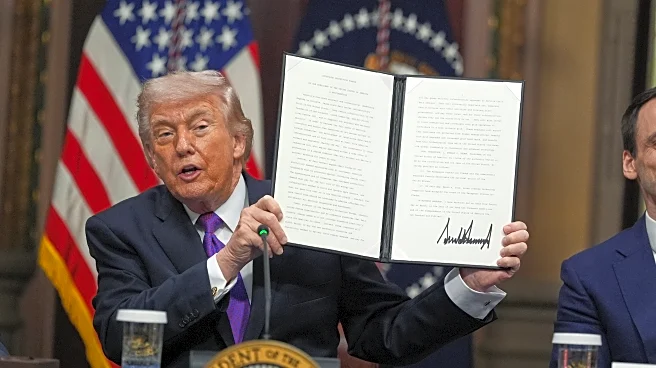
President Donald Trump, alongside CEOs from major tech companies, has signed a 'ratepayer protection pledge' aimed at addressing rising electricity costs associated with data centers. This agreement, announced during a White House roundtable, involves
companies like Google, Microsoft, Meta, Oracle, xAI, OpenAI, and Amazon. These companies have committed to building or purchasing the necessary electricity to power data centers and the infrastructure to connect this power to the grid. The pledge includes a provision for these companies to pay a different rate for electricity than regular consumers. The initiative is part of an effort to alleviate voter concerns about affordability ahead of the 2026 midterm elections. However, the pledge lacks federal enforcement power, relying instead on state utility regulators to implement and enforce the new rate structures.
Why It's Important?
The pledge is significant as it addresses the growing concern over electricity costs driven by the expansion of data centers, particularly those supporting artificial intelligence. These centers have been linked to rising electricity prices in regions like the Mid-Atlantic, where the world's largest cluster of data centers is located. By committing to this pledge, tech companies acknowledge the impact of their operations on consumer electricity bills. The initiative highlights the need for collaboration between the federal government, state regulators, and private companies to manage the economic impact of technological advancements. While the pledge is a step towards addressing these issues, its effectiveness will depend on state-level actions and regulations.
What's Next?
The next steps involve state utility regulators negotiating separate rate structures with tech companies to ensure that consumers are not burdened with the costs of powering data centers. As several states begin to adopt regulations to protect consumers, the success of this initiative will depend on the willingness of state bodies to enforce these new structures. The White House and tech companies may face continued public scrutiny and pressure to ensure that the pledge translates into tangible benefits for consumers. The development of federal regulations could also be a future consideration to provide a more uniform approach across states.