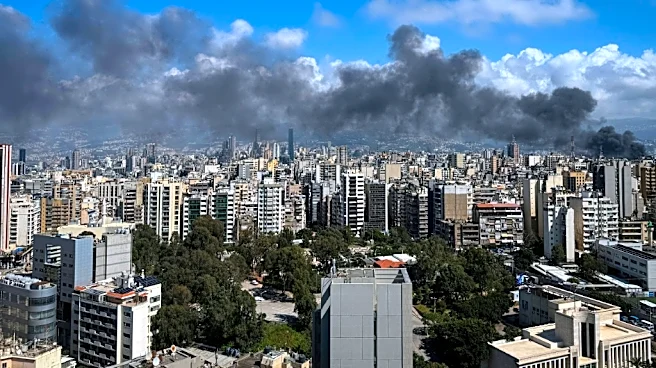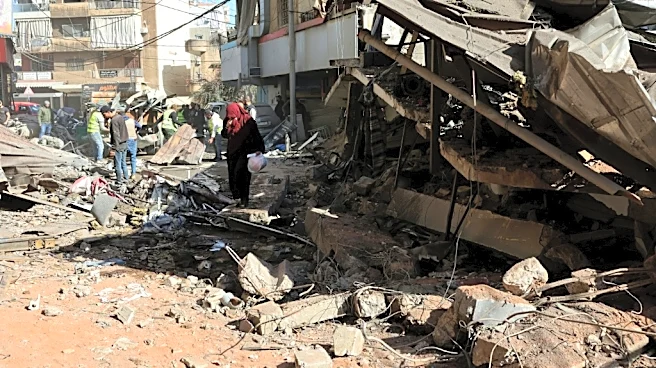





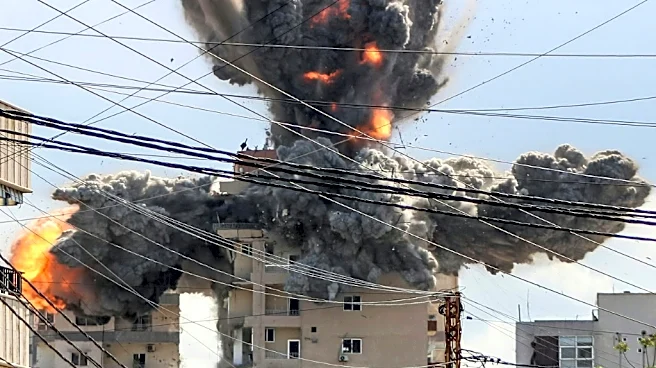


What's Happening?
Lebanon has declared that it will not engage in negotiations with Israel while under attack, according to a Lebanese official. This statement comes in response to Israel's plan to initiate direct negotiations aimed at ending hostilities. An Israeli source
confirmed that there is no ceasefire, and talks will proceed under fire. Israeli Prime Minister Netanyahu reiterated that there will be no ceasefire with Lebanon as he orders these talks. The situation highlights the ongoing tensions between the two nations, with Lebanon standing firm on its position against negotiating under current conditions.
Why It's Important?
The refusal of Lebanon to negotiate under fire underscores the fragile and volatile nature of Middle Eastern geopolitics. The ongoing hostilities between Lebanon and Israel have broader implications for regional stability and international diplomatic efforts. The situation could potentially escalate into a larger conflict, affecting neighboring countries and international relations. The stance taken by Lebanon reflects the complexities of achieving peace in a region marked by historical animosities and geopolitical interests.
What's Next?
The continuation of hostilities without a ceasefire suggests that tensions may persist, potentially leading to further military engagements. International actors may seek to mediate or intervene to prevent escalation. The situation will likely remain a point of focus for regional and global diplomatic efforts, with potential implications for future peace negotiations and security arrangements in the Middle East.