
What's Happening?
AAA projects that 81.5 million Americans will travel at least 50 miles from home for Thanksgiving between November 24 and November 30, 2026. This forecast represents a 0.1% decline from last year's 81.6
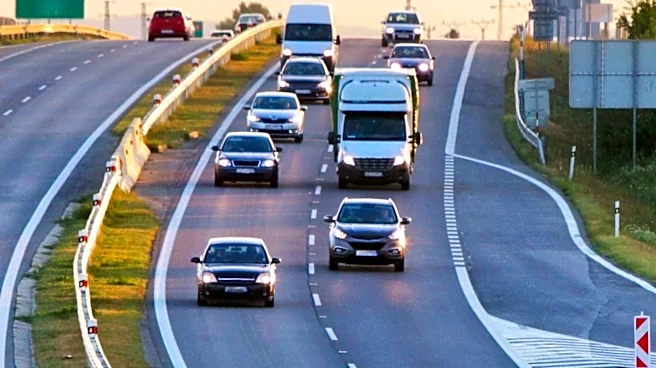
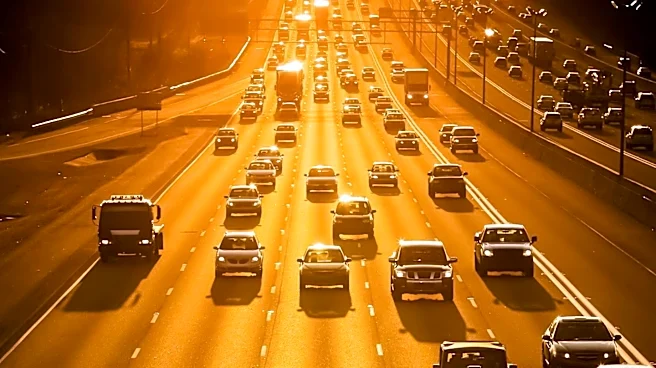
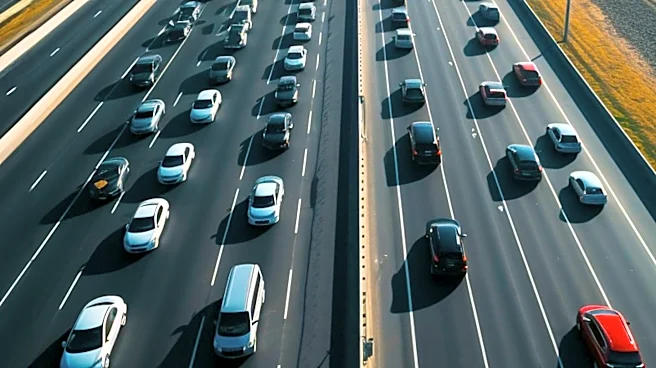
million travelers, marking the first decrease after a three-year streak of record Thanksgiving travel that began in 2023. Approximately 72.9 million people are expected to travel by car, a slight drop from 73.1 million last year, partly due to record-high gas prices. Domestic air travel is also projected to decrease slightly by 0.2% to 5.96 million travelers, with roundtrip domestic flights averaging $800, a 17% increase in cost. Conversely, travel by bus, train, and cruise is expected to rise by 4.1%, with 2.6 million Americans opting for these modes of transportation. The busiest travel days are anticipated to be the Tuesday and Wednesday before Thanksgiving, and the Sunday and Monday following the holiday.
Why It's Important?
This slight decline in Thanksgiving travel, while minimal, signals a potential shift in consumer behavior influenced by economic factors such as elevated travel costs. The decrease in road and air travel, traditionally the dominant modes, suggests that higher gas prices and increased airfares are impacting holiday budgets. The rise in bus, train, and cruise travel indicates that some Americans are seeking more cost-effective or alternative travel experiences. For the U.S. travel industry, this forecast highlights the sensitivity of demand to pricing, particularly for discretionary spending like holiday travel. While overall volumes remain near record levels, the shift in modes of transport could affect revenue streams for airlines and gas stations, potentially benefiting public transportation and cruise lines. The forecast also provides critical data for infrastructure planning, as major metro areas are still expected to experience significant traffic congestion.
What's Next?
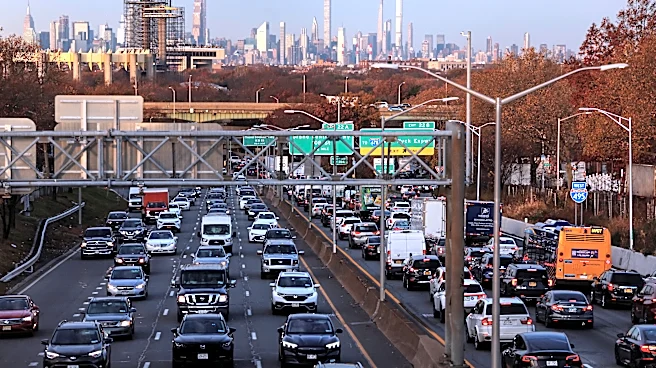
Travelers should anticipate continued high traffic volumes on roads and at airports, particularly on the peak travel days. Despite the slight dip, congestion in major metropolitan areas like New York, Washington, D.C., and Los Angeles could more than double normal levels. Consumers may continue to explore alternative travel options like buses, trains, and cruises if traditional modes remain expensive. The trend of higher travel costs could influence future holiday travel patterns, potentially leading to more Americans opting for shorter trips, staying closer to home, or choosing less conventional travel methods. Travel providers may need to adjust pricing strategies and promotions to attract travelers in a cost-sensitive environment. The data also suggests that the travel industry will closely monitor fuel prices and airfare trends as they significantly impact consumer decisions.
Beyond the Headlines
The slight reduction in Thanksgiving travel, after a period of sustained growth, could be an early indicator of broader economic pressures on American households. While the decline is small, it suggests that even for a culturally significant holiday like Thanksgiving, cost considerations are becoming more prominent. This could lead to a re-evaluation of travel budgets and priorities for many families. The increased popularity of cruises and other modes of transport might also reflect a desire for more structured or all-inclusive travel experiences that offer perceived value amidst rising individual component costs. Furthermore, the forecast underscores the ongoing challenge for the travel industry to balance demand with pricing, especially in a period where inflation and economic uncertainty are prevalent. This could also prompt a closer look at the environmental impact of different travel modes, as consumers potentially shift towards more collective transportation options.