




What's Happening?
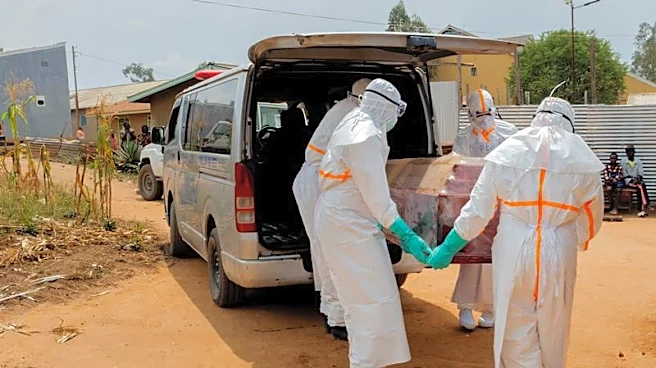
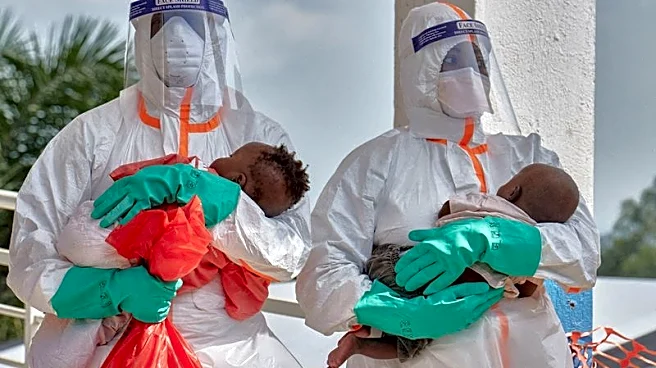
Moderna has initiated a Phase I clinical trial for its mRNA-1469 vaccine, targeting the Bundibugyo strain of the Ebola virus. This development follows authorization from Health Canada, marking a significant step in combating the ongoing Ebola outbreak
in the Democratic Republic of the Congo. The trial is part of a collaboration with the Coalition for Epidemic Preparedness Innovations (CEPI), which has committed up to $50 million to support the vaccine's development. The Bundibugyo strain has been responsible for over 3,000 confirmed cases and more than 1,400 deaths. Moderna's CEO, Stéphane Bancel, emphasized the importance of this milestone, noting the lack of an approved vaccine for this strain. The collaboration aims to rapidly advance to larger Phase II and III trials if initial results are promising.
Why It's Important?
The initiation of this trial is crucial as it addresses a significant gap in the fight against Ebola, particularly the Bundibugyo strain, which has no approved vaccine. The rapid progression of this trial underscores the urgency of developing effective vaccines to curb the spread of the virus, which has caused a substantial number of fatalities. The collaboration with CEPI highlights the global effort to enhance pandemic preparedness and response capabilities. Success in this trial could lead to a scalable vaccine solution, providing critical protection to vulnerable populations in low- and middle-income countries, thereby potentially saving thousands of lives.
What's Next?
If the Phase I trial results are favorable, Moderna plans to scale up production and move swiftly into Phase II and III trials. This progression will be crucial in determining the vaccine's efficacy and safety on a larger scale. The outcome of these trials will influence global health strategies and funding allocations for Ebola prevention. Additionally, the trial's success could pave the way for similar mRNA-based approaches to other infectious diseases, enhancing global health security.