







What's Happening?
South Carolina's colonial indigo industry, a significant cash crop in the 18th century, was heavily dependent on the agricultural knowledge and labor of enslaved Africans and African Americans. While Eliza Lucas Pinckney is often credited with establishing
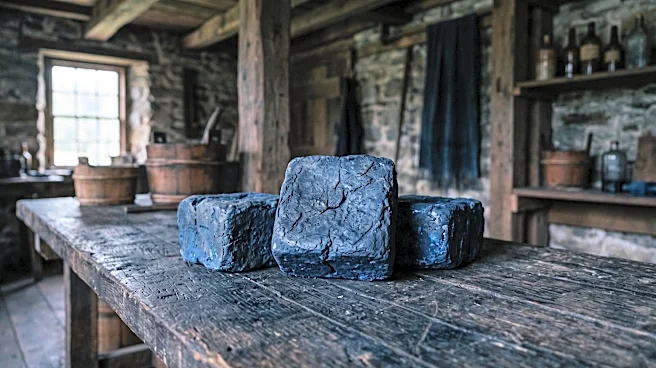
indigo as a major commercial export in the 1740s, her efforts were part of a broader movement involving independent planters, colonial botanists, and dyemakers. These collective experiments, combined with the essential skills of enslaved people in cultivation, harvesting, and processing, transformed indigo into a valuable blue dye for international markets. The historical narrative of indigo in South Carolina extends beyond individual contributions, encompassing transatlantic agricultural knowledge and the profound impact of enslaved labor.
Why It's Important?
The reliance on enslaved labor for South Carolina's indigo industry highlights a critical aspect of the U.S. colonial economy and its foundational injustices. The economic prosperity derived from indigo, a lucrative cash crop, was directly linked to the exploitation and forced labor of African and African American individuals. This historical context is crucial for understanding the development of wealth in the Southern colonies and the enduring legacy of slavery on American society, economics, and race relations. Recognizing the contributions of enslaved people in this industry underscores the systemic nature of their exploitation and their often-unacknowledged role in building the nation's early economy.
What's Next?
Continued historical research and educational initiatives are essential to further illuminate the complex history of indigo cultivation and the central role of enslaved people. This ongoing work will contribute to a more comprehensive understanding of American history, fostering discussions about reparations, historical memory, and social justice. Educational institutions and cultural organizations are likely to continue developing programs and exhibits that acknowledge and honor the contributions of enslaved individuals, ensuring their stories are integrated into the broader historical narrative. This will help to address past omissions and provide a more accurate and inclusive account of the nation's origins.
Beyond the Headlines
The story of indigo in South Carolina extends beyond mere agricultural and commercial success; it delves into the ethical and moral dimensions of economic development built upon human bondage. It reflects the development of traditional dye-making techniques, passed down and adapted by enslaved individuals, and the complex social and cultural history of the Lowcountry. This historical narrative serves as a powerful reminder of the human cost of economic gain and the importance of acknowledging the full spectrum of contributions, particularly those from marginalized communities, in shaping national industries and identities. It also prompts reflection on how historical injustices continue to influence contemporary societal structures.