




What's Happening?
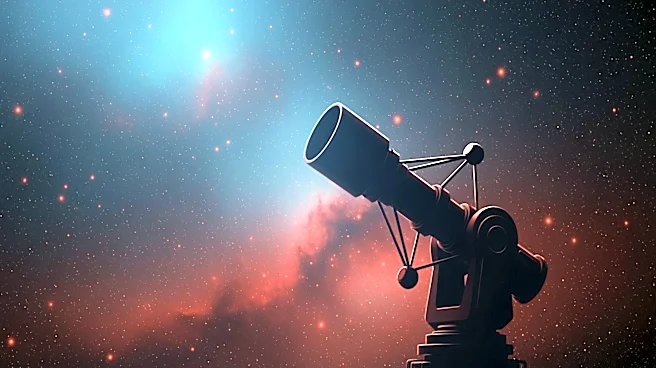
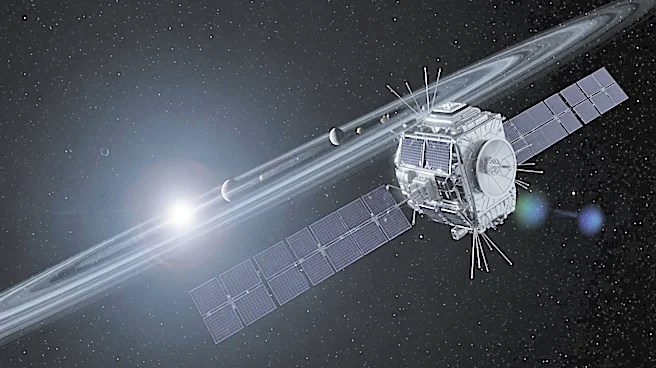
NASA is utilizing the Hubble Space Telescope to conduct preliminary observations of the Milky Way's galactic bulge, a region near the galaxy's center. This effort is in preparation for the upcoming Galactic Bulge Time-Domain Survey by the Nancy Grace
Roman Space Telescope. The survey aims to enhance the understanding of microlensing events, which are gravitational phenomena that can reveal the presence of dark matter and exoplanets. The Hubble's observations will provide a baseline for the Roman Telescope's future data collection, allowing for more precise analysis. The survey will cover multiple fields of view, including a critical area at the galactic center, which is home to the supermassive black hole Sagittarius A*.
Why It's Important?
This collaboration between the Hubble and Roman telescopes is significant for advancing astronomical research. By studying the galactic bulge, scientists hope to gain insights into the structure and evolution of the Milky Way. The data collected could lead to discoveries about the distribution of dark matter and the frequency of exoplanets in our galaxy. Such findings have the potential to reshape current models of galactic formation and evolution. Additionally, understanding microlensing events can improve techniques for detecting distant celestial objects, contributing to the broader field of cosmology.
What's Next?
The Roman Space Telescope is scheduled to launch in the coming years, and its observations will build on the groundwork laid by the Hubble Telescope. Researchers anticipate that the Roman's advanced capabilities will provide unprecedented detail in the study of the galactic bulge. The scientific community is expected to closely monitor the results, which could influence future space missions and research priorities. As the survey progresses, it may also prompt new collaborations and technological developments in the field of space exploration.