
What's Happening?
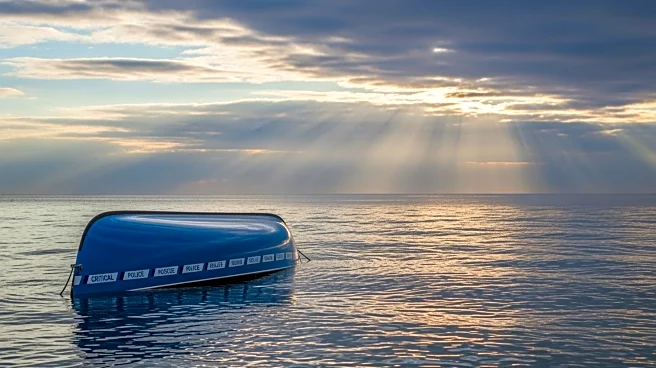
The U.S. Coast Guard, in collaboration with a tanker crew, successfully rescued Benoit Bourguet, a 47-year-old Belgian rower, after his boat capsized during the World's Toughest Row Race. The race spans
3,000 miles from Spain to Antigua. Bourguet's vessel, the City of Liverpool, was overturned by two rogue waves approximately 1,275 miles east of Puerto Rico. After being in distress for about 24 hours, Bourguet deployed a life raft and sent out emergency distress alerts. The Coast Guard received these alerts and coordinated with race organizers and a nearby tanker, the Horten, to execute the rescue. The Horten, which was traveling from Germany to Guyana, diverted its course to reach Bourguet, taking over 12 hours to arrive. Upon arrival, the crew used a life ring to bring Bourguet aboard safely. He was found to be dehydrated but otherwise in good health.
Why It's Important?
This incident underscores the critical role of international maritime cooperation and the effectiveness of emergency distress systems in ensuring the safety of individuals undertaking extreme challenges at sea. The successful rescue operation highlights the importance of having functional personal distress beacons registered with nautical authorities, which can significantly enhance the chances of survival in maritime emergencies. The event also draws attention to the inherent risks associated with extreme sports and the necessity for robust safety measures. The coordination between the Coast Guard and the Horten's crew exemplifies the global maritime community's commitment to safety and rescue operations, potentially influencing future protocols and safety standards in similar events.
What's Next?
Following the rescue, arrangements are being made for Bourguet to be transferred from the Horten tanker at a later time. The incident may prompt race organizers to review and possibly enhance safety protocols for future events, ensuring participants are better prepared for unforeseen circumstances. Additionally, the Coast Guard and other maritime agencies might use this incident as a case study to improve response strategies and coordination efforts in international waters. The event could also lead to increased awareness and adoption of personal distress beacons among adventurers and athletes participating in high-risk activities.
Beyond the Headlines
The rescue operation highlights the ethical responsibility of maritime operators to assist those in distress, regardless of nationality or the nature of their journey. It also raises questions about the balance between adventure and safety in extreme sports, potentially influencing public perception and regulatory approaches. The incident may encourage a broader discussion on the environmental impact of such races and the sustainability of adventure tourism, prompting stakeholders to consider more eco-friendly practices.