





What's Happening?
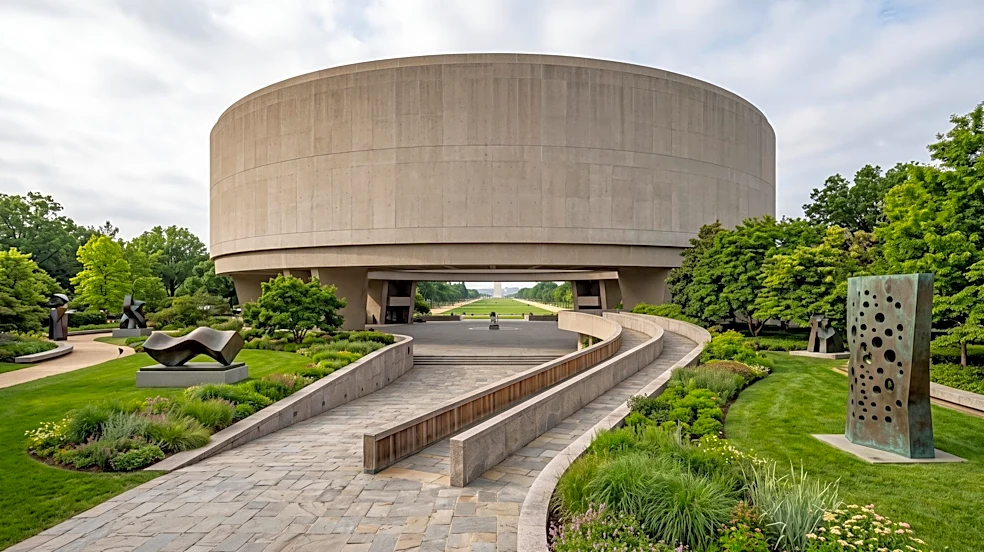
The Hirshhorn Museum and Sculpture Garden on the National Mall is scheduled to reopen on October 31, 2026, following a four-year transformation. The redesign of the garden, described by the Smithsonian as a permanent exhibition, was led by artist and architect
Hiroshi Sugimoto. The revitalized space will feature nearly sixty sculptures and a renewed landscape. This project aims to integrate the museum's building, plaza, and outdoor areas, enhancing the visitor experience within the capital's central civic landscape. The garden, covering 1.3 acres, will include five entry points, such as a wider entrance on the National Mall side, broad ramps from the north and south, and a restored underground passageway that had been closed for many years. The layout will comprise East, Central, and West garden areas, with the Central Garden featuring a revised entrance and exit around the reopened passageway. Additionally, the West Lawn will host a presentation of Yoshitomo Nara’s Sentinels of Stillness upon reopening.
Why It's Important?
The reopening of the Hirshhorn Sculpture Garden is significant for several reasons, primarily impacting the cultural landscape of Washington, D.C., and the National Mall. As a permanent exhibition of the Smithsonian, its transformation under Hiroshi Sugimoto's design will likely draw increased attention to modern and contemporary sculpture, potentially boosting tourism and cultural engagement in the area. The enhanced accessibility, with five new entry points and a restored underground passageway, will improve visitor flow and connectivity between the museum, its plaza, and the outdoor collection, making the art more accessible to a broader public. This revitalization also contributes to the ongoing evolution of the National Mall, a site defined by its long views and museums, reinforcing its role as a premier destination for art and history. The integration of nearly sixty sculptures and a renewed landscape will offer a fresh perspective on outdoor art installations, potentially influencing future urban planning and public art initiatives in other U.S. cities.
What's Next?
Following its reopening on October 31, 2026, the Hirshhorn Sculpture Garden will immediately become a key attraction on the National Mall. Visitors can expect to explore the newly designed landscape and the expanded collection of nearly sixty sculptures. The West Lawn will specifically feature Yoshitomo Nara’s 'Sentinels of Stillness' as part of the reopening. The enhanced accessibility, including the restored underground passageway, will facilitate easier movement for visitors between the museum and its outdoor spaces. The Trust for the National Mall and the Smithsonian will likely monitor visitor engagement and the impact of the redesign on the overall experience. Future programming and exhibitions within the garden are anticipated to leverage the new layout and increased capacity. The success of this transformation could also influence future renovation projects for other cultural institutions located along the National Mall, potentially setting a precedent for integrating art, architecture, and landscape design in public spaces.
Beyond the Headlines
The redesign of the Hirshhorn Sculpture Garden by Hiroshi Sugimoto extends beyond a mere aesthetic upgrade; it represents a deeper philosophical approach to integrating art, nature, and urban space. Sugimoto's work often explores themes of time, perception, and the relationship between the natural and built environments, suggesting that the garden will offer a contemplative experience rather than just a display of sculptures. The restoration of the underground passageway, in particular, could symbolize a reconnection with the historical layers of the National Mall, which has evolved significantly since Pierre Charles L’Enfant’s 1791 plan. This project could also spark broader discussions about the role of public art in fostering civic engagement and well-being, especially in a highly symbolic location like the National Mall. The emphasis on integrating the museum's various components—building, plaza, and outdoor spaces—reflects a contemporary trend in museum design towards creating holistic, immersive cultural experiences that blur the lines between indoor and outdoor exhibitions.