


What's Happening?
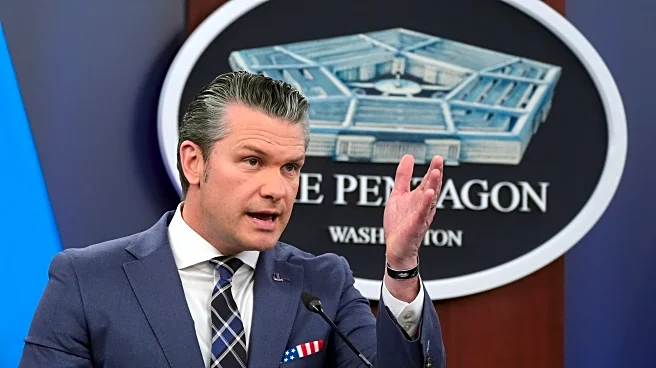
A federal judge has blocked a Pentagon policy that restricted press access to information not officially sanctioned for release. The policy, introduced in 2025 by Defense Secretary Pete Hegseth, aimed to limit journalists' coverage to official statements,
labeling those seeking information outside these channels as security risks. This policy faced criticism for potentially violating the First Amendment. The New York Times filed a lawsuit against the Pentagon, arguing that the policy infringed on free speech and due process rights. U.S. District Judge Paul Friedman ruled against the policy, emphasizing the importance of public access to diverse perspectives on government actions, especially in light of recent military engagements. The Pentagon plans to appeal the decision, while press advocates have celebrated the ruling as a victory for press freedom.
Why It's Important?
The ruling underscores the ongoing tension between national security and press freedom in the U.S. The blocked policy highlights concerns about government overreach and the potential suppression of independent journalism. By challenging the policy, the New York Times and other media outlets have reinforced the role of the press in holding the government accountable. This decision is significant as it reaffirms the constitutional protections for free speech and press, ensuring that journalists can continue to report on government actions without undue restriction. The outcome of this case could influence future policies regarding media access and transparency, impacting how the public receives information about government activities.
What's Next?
The Pentagon's decision to appeal the ruling suggests that the legal battle over press access and First Amendment rights is far from over. The appeal process will likely involve further scrutiny of the balance between national security and press freedom. Media organizations and First Amendment advocates will continue to monitor the situation closely, potentially leading to additional legal challenges if similar policies are proposed. The outcome of the appeal could set a precedent for how government agencies interact with the press, influencing future policies and legal interpretations of press freedoms in the U.S.