
What's Happening?
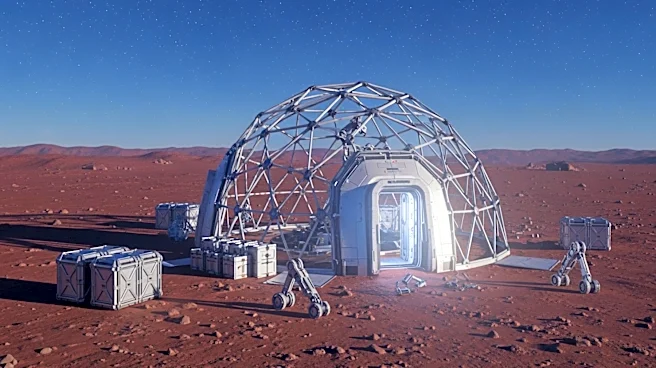
A recent study highlights the logistical challenges of establishing a permanent human presence on Mars using SpaceX's Starship. The study, led by researcher Serena Suriano, suggests that Mars lacks the concentrated
mineral deposits necessary for large-scale construction, making it impractical to rely solely on Martian resources. Instead, the study proposes mining resources from the Main Belt asteroids between Mars and Jupiter. However, the execution of this idea faces significant challenges due to the laws of orbital mechanics. The study outlines a two-stop supply chain involving mining metallic asteroids and refueling at C-type asteroids, but the process is slow and technically demanding.
Why It's Important?
The findings underscore the complexities of space colonization, particularly the need for sustainable resource acquisition beyond Earth. The study's proposal to mine asteroids could redefine how space missions are planned, potentially reducing reliance on Earth-based resources. This approach could pave the way for more sustainable space exploration and settlement, impacting future missions by NASA and private companies like SpaceX. However, the technical and logistical hurdles highlight the need for advancements in propulsion and resource extraction technologies.
What's Next?
The study suggests a twenty-year launch window beginning in 2040 for implementing the proposed asteroid mining strategy. This timeline indicates that significant technological advancements and planning are required before such missions can be realized. The development of non-chemical propulsion technologies could accelerate this process, but their readiness for Mars missions remains uncertain. The study calls for increased focus on scaling up in-situ propellant production capabilities to make the proposed supply chain viable.
Beyond the Headlines
The study raises ethical and environmental considerations regarding space mining, such as the potential impact on asteroid ecosystems and the legal framework governing extraterrestrial resource extraction. It also highlights the long-term vision of transforming Mars into a self-sustaining colony, which could influence international space policy and collaboration. The concept of utilizing space resources could lead to a paradigm shift in how humanity approaches space exploration and resource management.