


What's Happening?
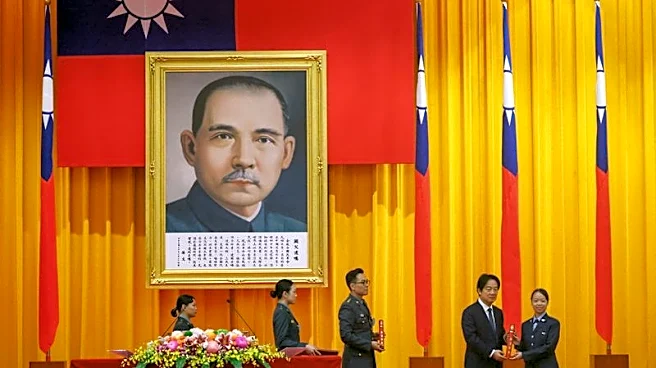
A bipartisan delegation from the U.S. House of Representatives, including Jimmy Panetta and Donald Norcross, arrived in Taiwan for a three-day visit on March 27. The delegation is led by Jack Bergman, chair of the Subcommittee on Intelligence and Special
Operations under the House Armed Services Committee. Their itinerary includes meetings with President Tsai Ing-wen, Vice President and President-elect Lai Ching-te, and Vice President-elect Hsiao Bi-khim. The purpose of these meetings is to exchange views on Taiwan-U.S. relations, cross-strait security, and regional stability. This visit follows a previous trip by Stephanie Murphy in 2022 and underscores the U.S. commitment to security cooperation and peace in the Taiwan Strait and Indo-Pacific region. The Ministry of Foreign Affairs (MOFA) noted that the U.S. Congress has consistently shown strong bipartisan support for Taiwan through regular delegation visits and the inclusion of measures to enhance Taiwan-U.S. security collaboration in the National Defense Authorization Act.
Why It's Important?
This visit by a U.S. congressional delegation to Taiwan is significant as it reaffirms the United States' commitment to its relationship with Taiwan amidst ongoing geopolitical tensions in the Indo-Pacific. The bipartisan nature of the delegation, featuring members from both major U.S. political parties, signals a unified front in U.S. foreign policy regarding Taiwan. Discussions on cross-strait and regional security are crucial given the strategic importance of the Taiwan Strait and the broader Indo-Pacific region for global trade and stability. The emphasis on security cooperation, including foreign military financing and presidential drawdown authority, highlights the U.S.'s role in bolstering Taiwan's defense capabilities. This continued engagement is vital for maintaining a balance of power in the region and deterring potential aggression, thereby impacting U.S. strategic interests and alliances in Asia.
What's Next?
The delegation's meetings with key Taiwanese leaders are expected to conclude with further statements or joint communiqués reinforcing U.S.-Taiwan ties. These discussions will likely shape future legislative actions in the U.S. Congress, particularly concerning the National Defense Authorization Act, which regularly includes provisions for Taiwan's security. The ongoing visits by U.S. congressional delegations during every recess indicate a sustained pattern of engagement, suggesting that similar high-level interactions will continue. These engagements are crucial for the continuous assessment and adaptation of U.S. policy towards Taiwan, especially in response to evolving regional dynamics. The outcomes of these meetings could also influence international perceptions of U.S. resolve in supporting democratic allies in the face of geopolitical challenges.
Beyond the Headlines
Beyond the immediate diplomatic exchanges, this visit carries deeper implications for international law and the principle of national sovereignty. The consistent U.S. congressional support for Taiwan, demonstrated through these visits and legislative actions, subtly challenges the 'One China' policy in practice, even while officially adhering to it. This nuanced approach allows the U.S. to maintain strategic ambiguity while providing substantive support to Taiwan. The visits also serve as a powerful symbolic gesture, signaling to other nations in the Indo-Pacific that the U.S. remains an active and reliable partner in regional security. This ongoing engagement could contribute to a broader re-evaluation of international norms regarding self-determination and the role of major powers in safeguarding democratic governance in contested territories.