






What's Happening?
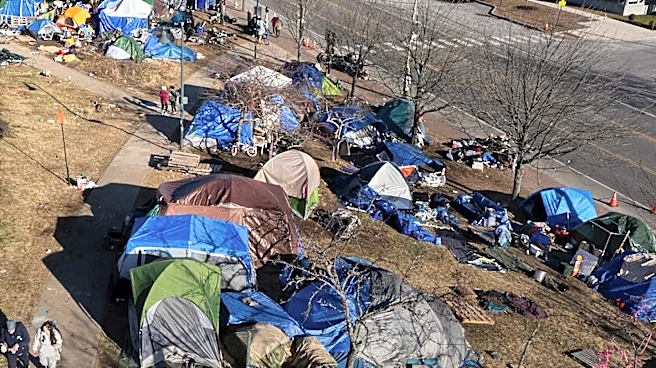
Anchorage officials, including Police Chief Sean Case, report that the city's criminalized camping law, implemented over a year ago, is effectively contributing to their broader strategy for addressing homelessness. The law prohibits camping in specific
high-priority zones, such as near schools, playgrounds, on trails, or adjacent to high-speed roads. Since its enforcement began in September, officers have interacted with over a thousand individuals, with 89% voluntarily complying and moving on. The law allows police to clear homeless camps immediately without prior warning. While most interactions result in voluntary compliance, 109 cases have been forwarded to the city prosecutor's office, with over half still pending and six convictions, one of which is currently on appeal. Officers have also identified individuals with unrelated outstanding warrants during these enforcement actions.
Why It's Important?
This development is significant for Anchorage's public policy and social landscape, as it reflects a shift in how the city manages homelessness and public spaces. The law's reported success in achieving voluntary compliance and preventing entrenched encampments could serve as a model or point of reference for other U.S. cities grappling with similar issues. However, it also raises questions about the balance between public order and the welfare of unhoused individuals, particularly concerning the availability and accessibility of resources like shelter beds and behavioral health services. The criminalization aspect, even if primarily used as a last resort, has implications for the legal rights and social support systems for vulnerable populations, potentially leading to further legal challenges or advocacy efforts from civil society groups.
What's Next?
Anchorage officials are expected to continue enforcing the criminalized camping law, with ongoing monitoring of its effectiveness and impact. The pending cases in the city prosecutor's office will proceed, and the outcome of the appeal on one conviction could set precedents for future enforcement. The city will likely face continued scrutiny regarding the availability of adequate shelter and support services for those displaced by the law. Advocacy groups for the homeless may intensify their efforts to push for more comprehensive solutions, such as increased funding for housing, mental health, and addiction treatment programs, rather than relying primarily on enforcement. The long-term success of this strategy will depend on its ability to not only clear encampments but also to provide sustainable pathways out of homelessness for affected individuals.
Beyond the Headlines
The implementation and reported success of Anchorage's criminalized camping law delve into deeper societal questions about how communities address homelessness. Beyond the immediate concerns of public safety and urban aesthetics, the policy touches upon the ethical considerations of criminalizing poverty and the effectiveness of punitive measures versus supportive services. It highlights the ongoing debate about the root causes of homelessness and whether legal enforcement truly solves the problem or merely displaces it. The law's emphasis on using enforcement as a 'gateway' to resources, while potentially well-intentioned, raises questions about coercion and the voluntary nature of seeking help. This approach could also influence public perception of homelessness, potentially shifting it from a social welfare issue to a public order concern, with long-term implications for community compassion and resource allocation.