
What's Happening?
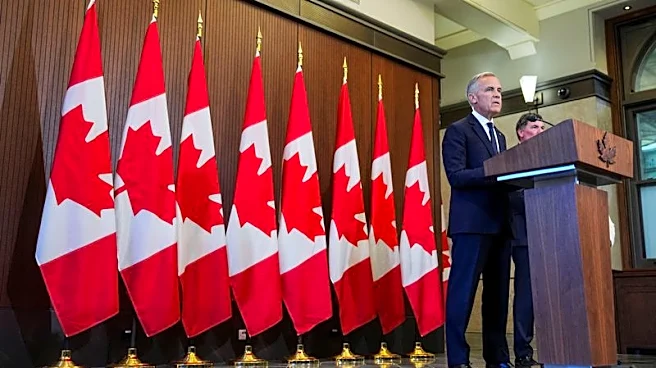
The Conservative Party of Canada is facing challenges from within its ranks due to the significant influence of social media 'trolls' or 'influencers.' These individuals, who often post opinion-driven content to generate clicks and views, have gained
considerable sway within the conservative movement. The party, particularly under leader Pierre Poilievre, has embraced these 'content creators,' even granting them special access passes at conventions. This strategy, initially seen as a novel way to rally conservatives, has begun to define Poilievre and his party in ways that may be detrimental. The online space surrounding the party is increasingly dominated by self-styled 'independent' influencers who amplify populist messaging and an 'own the Libs' mentality. Their content frequently features culture war pronouncements, pro-America leanings, and anti-Liberal screeds, which were further amplified during events like the COVID-19 pandemic and the trucker convoy. This internal dynamic is leading to a self-defeating rhythm of name-calling and a struggle to define what constitutes a 'true' conservative, with influencers targeting those who disagree with the current leadership.
Why It's Important?
The rise of social media influencers within a major political party like the Conservative Party of Canada highlights a significant shift in political communication and internal party dynamics. This phenomenon, while observed in other countries, including the U.S., demonstrates how digital platforms can empower voices that may not align with traditional party structures or broader electoral appeal. The party's reliance on these influencers, particularly in the wake of President Trump's political style, suggests a strategic choice to engage with a specific segment of the electorate, but it also risks alienating more moderate voters. The internal strife and the focus on 'owning the Libs' rather than substantive policy discussions could hinder the party's ability to present a unified and appealing front to the wider Canadian public. This situation underscores the evolving nature of political discourse, where online engagement can both mobilize a base and create internal divisions, impacting a party's electability and long-term stability.
What's Next?
Pierre Poilievre is unlikely to sever ties with this influential network of conservative content creators, especially given his current polling position and the absence of an obvious replacement for his leadership. His continued engagement with these influencers suggests a strategy to maintain support within his base, even if it contributes to internal divisions. The party may continue to experience internal conflicts as these influencers attempt to define conservative ideology and challenge dissenting views. This could lead to further fragmentation within the party, potentially impacting its performance in future elections. The ongoing struggle to balance the influence of online personalities with broader electoral appeal will be a critical challenge for the Conservative Party. The outcome of this internal dynamic could determine the party's future direction and its ability to unite various conservative factions under a common banner.
Beyond the Headlines
The situation within the Conservative Party of Canada reflects a broader trend in democratic politics where the digital landscape has reshaped how political movements are organized and how public opinion is formed. The concept of 'trolls' or 'influencers' moving from the fringes to the center of political parties raises questions about the integrity of political discourse and the potential for echo chambers to dominate internal debates. This shift can lead to a more polarized political environment, where nuanced discussions are replaced by aggressive, opinion-driven content. The challenge for political parties is to harness the power of digital communication for mobilization without succumbing to the divisive and often unproductive aspects of online culture. The long-term implications include a potential erosion of traditional party structures, a greater emphasis on personality-driven politics, and a struggle to maintain a coherent and inclusive political identity in the face of online tribalism.