


What's Happening?
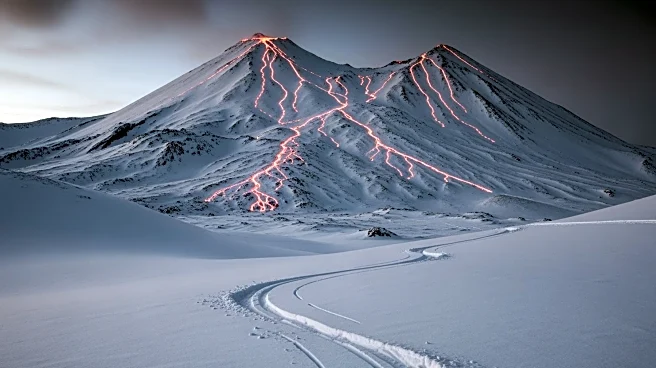
Mount Etna, Europe's largest active volcano located in Sicily, has recently experienced intensified volcanic activity. On December 27, 2025, the volcano erupted, spewing thick plumes of ash into the sky. Despite the eruption, skiers were seen gliding
down the slopes of Mount Etna, undeterred by the volcanic activity. The eruption was characterized by lava fountains, loud booms, and eruption columns that launched dark clouds of ash. The activity began on December 24, when Italy's National Institute of Geophysics and Volcanology detected changes in volcanic tremors and infrasonic activity. The northeast crater, the oldest of Etna's four main summit craters, became active after nearly 28 years of dormancy. The volcanic activity intensified over the following days, with ejections of incandescent material and lava jets reaching 300 to 400 meters high.
Why It's Important?
The eruption of Mount Etna is significant as it highlights the ongoing geological activity in the region, which can have implications for local tourism and safety. Mount Etna is a popular destination for tourists, photographers, and winter sports enthusiasts, drawn by its snowy landscape and frequent volcanic activity. The recent eruption serves as a reminder of the potential dangers associated with visiting active volcanic sites. Authorities have previously warned visitors to avoid approaching running lava due to the extreme danger it poses. The eruption also underscores the importance of monitoring volcanic activity to ensure public safety and mitigate potential risks to the local population and infrastructure.
What's Next?
As Mount Etna continues to exhibit volcanic activity, monitoring by Italy's National Institute of Geophysics and Volcanology will likely continue to assess any changes in the volcano's behavior. Authorities may issue further warnings or restrictions to ensure the safety of visitors and residents in the area. The ongoing activity could also impact air travel, as ash clouds can pose a hazard to aircraft. Local businesses and tourism operators may need to adapt to the changing conditions, balancing the attraction of the volcano with the need for safety precautions.
Beyond the Headlines
The eruption of Mount Etna raises broader questions about the balance between tourism and safety in regions with active volcanoes. While the natural spectacle of an eruption can attract visitors, it also poses significant risks that must be managed carefully. The event highlights the need for effective communication and emergency preparedness to protect both tourists and local communities. Additionally, the eruption serves as a reminder of the dynamic nature of Earth's geology and the importance of scientific research in understanding and predicting volcanic activity.