








What's Happening?
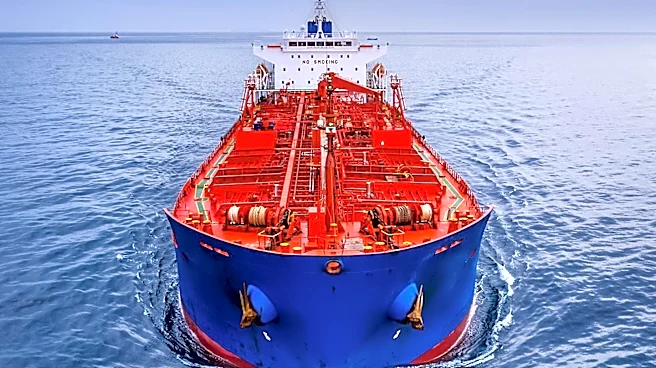
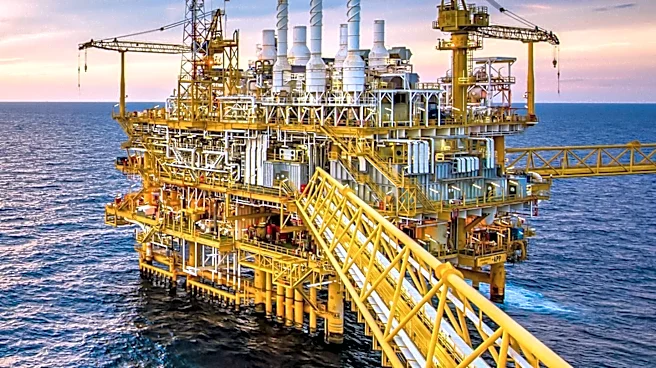
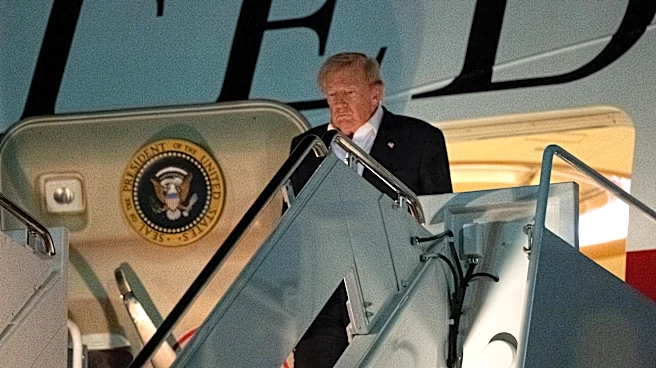
Oil prices have declined as markets evaluate the impact of recent U.S. military strikes on Iran, which have complicated efforts to end the conflict and fully reopen the Strait of Hormuz. Brent crude futures fell by 16 cents to $77.86 a barrel, while U.S. West
Texas Intermediate (WTI) crude futures decreased by 15 cents to $73.37 a barrel. The U.S. strikes were met with Iranian attacks on Kuwait and Bahrain, further escalating tensions. The situation has led to uncertainty regarding oil flows through the Strait of Hormuz, a critical passage for global oil and liquefied natural gas supplies.
Why It's Important?
The Strait of Hormuz is a strategic chokepoint for global energy supplies, and any disruptions can have significant implications for oil prices and market stability. The ongoing conflict between the U.S. and Iran highlights the geopolitical risks associated with energy supply routes, which can affect global economic conditions and energy security. The potential for further escalation or resolution of the conflict will influence oil market dynamics and pricing. The situation underscores the need for diplomatic solutions to ensure the stability of global energy supplies and prevent further market volatility.
What's Next?
The future of oil prices and market stability will depend on the resolution of the U.S.-Iran conflict and the reopening of the Strait of Hormuz. Diplomatic efforts are crucial to de-escalating tensions and ensuring the safe passage of oil through the strait. The potential for renewed negotiations between the U.S. and Iran could lead to a stabilization of oil flows and prices. However, continued hostilities or failed diplomatic efforts could result in further disruptions and volatility in the oil market.