






What's Happening?
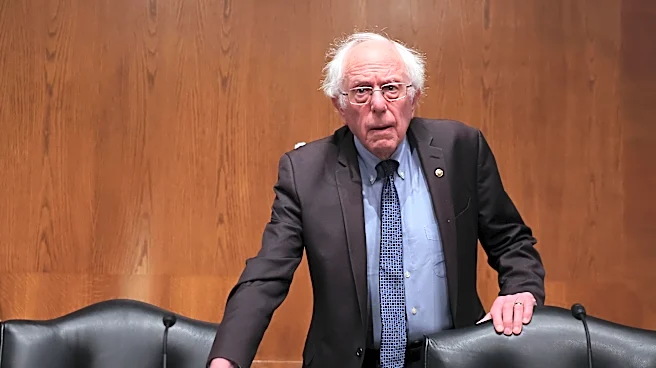
Steve Bannon, former White House chief strategist, has expressed concern over the rise of democratic socialism in the United States, highlighting recent electoral victories by candidates backed by figures like Bernie Sanders. Bannon points to the success
of Melat Kiros, a democratic socialist who recently defeated a long-standing Democratic incumbent in a Denver primary, as evidence of a significant political shift. He argues that both the Democratic and Republican establishments are unprepared for this transformation, which he describes as a 'new politics' that is replacing traditional political strategies. Bannon emphasizes that the enthusiasm and grassroots engagement of these new political movements are outpacing the financial and institutional advantages of established parties.
Why It's Important?
The rise of democratic socialism represents a potential realignment in U.S. politics, challenging both major parties to adapt to new voter expectations and engagement strategies. For the Democratic Party, this shift could mean a move away from centrist policies towards more progressive platforms, potentially alienating moderate voters but energizing younger and more diverse demographics. For Republicans, Bannon suggests that failing to address the populist left's appeal could result in significant electoral losses. This development underscores a broader trend of political disruption, where traditional campaign strategies and financial backing are less effective against grassroots mobilization and direct voter engagement.
What's Next?
As democratic socialist candidates continue to gain traction, both major parties may need to reassess their platforms and strategies. The Democratic Party might face internal conflicts as it balances the demands of its progressive wing with those of its traditional base. Meanwhile, Republicans may need to develop new policies that resonate with voters who are drawn to the populist messages of the left. The upcoming elections will serve as a critical test for both parties to demonstrate their ability to adapt to this evolving political landscape.
Beyond the Headlines
The rise of democratic socialism could lead to significant policy shifts in areas such as healthcare, housing, and economic inequality. This movement's emphasis on grassroots activism and voter engagement may also influence how future campaigns are conducted, potentially reducing the influence of large financial contributions and traditional media endorsements. Additionally, the ideological battle between populist movements on the left and right could redefine the political spectrum in the U.S., leading to new alliances and divisions within and between parties.