








What's Happening?
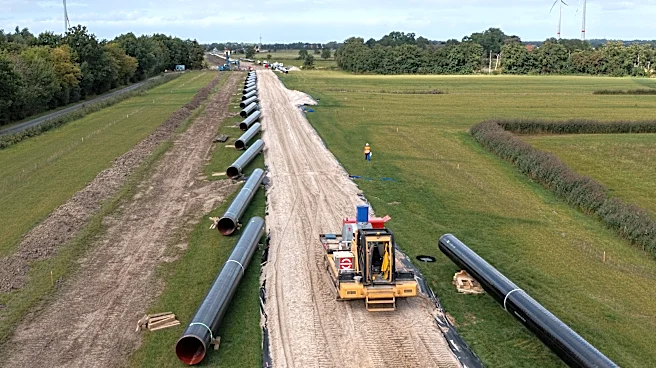
Alberta and Ontario have announced a proposal for a new 2,050-mile crude oil pipeline that would connect Hardisty, Alberta, to refineries in Sarnia, Ontario. The pipeline is expected to initially transport 500,000 barrels per day (bpd) and could eventually
increase to 800,000 bpd. This initiative aims to reduce the provinces' reliance on foreign oil markets. A feasibility study is anticipated by the end of the year, although details on the construction entity remain unspecified. Ontario is also considering pipeline extensions to new and existing ports. This proposal follows Canada's recent announcement of a new one-million-bpd oil pipeline from Alberta to the Pacific coast, to be built by Trans Mountain Corp in collaboration with Pembina Pipeline Corp.
Why It's Important?
The proposed pipeline represents a significant step in enhancing Canada's energy infrastructure and reducing dependency on foreign oil. By increasing domestic oil transportation capacity, Alberta and Ontario aim to strengthen their energy security and economic stability. The project could potentially create jobs and stimulate economic growth in the regions involved. However, it also raises environmental concerns and the need for careful consideration of ecological impacts. The pipeline's development could influence North American energy markets by altering supply dynamics and potentially affecting oil prices.
What's Next?
The next steps involve completing the feasibility study and identifying a private proponent to undertake the construction. Stakeholders, including environmental groups and local communities, are likely to engage in discussions about the project's implications. Regulatory approvals and potential legal challenges could also shape the project's timeline and execution. The outcome of these processes will determine the project's viability and future impact on the Canadian and broader North American energy landscape.