





What's Happening?
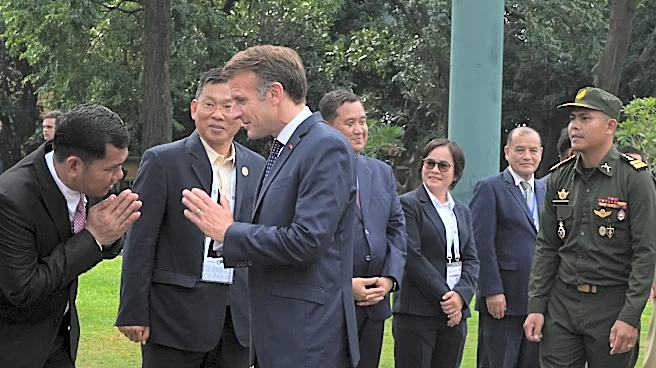
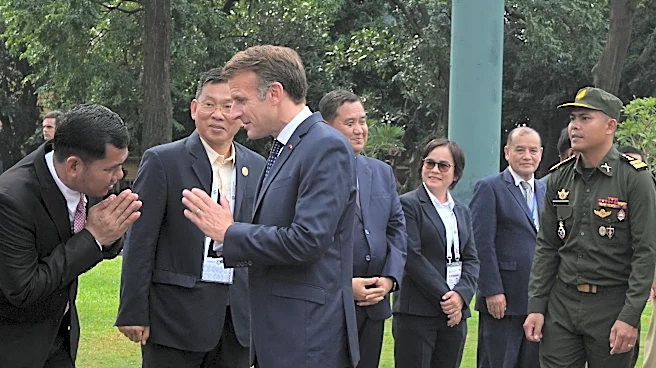
French President Emmanuel Macron has concluded a two-day official visit to Malaysia, his first since assuming office in May 2017. The visit, at the invitation of Malaysian Prime Minister Anwar Ibrahim, aimed to elevate bilateral relations to a strategic
partnership. During his stay, Macron held bilateral talks with Prime Minister Ibrahim, focusing on strengthening cooperation in critical areas such as defense, trade, energy transition, and critical minerals. Key outcomes include Malaysia agreeing to relax export curbs on raw rare earths to support joint development in the sector, with a project involving French firm Carester and Malaysian miner Malaco expected to begin operations in early 2027. Other agreements include cooperation in chiplet development between Malaysia's SkyeChip and French chip designer SiPearl, and a submarine cable project between Telekom Malaysia and Alcatel Submarine Networks. Macron also expressed France's interest in further deals in submarines and fighter jets, and cooperation on nuclear energy development and access to Europe's liquefied natural gas market. The visit also saw discussions on establishing a regional center to combat hybrid threats.
Why It's Important?
This strategic partnership between France and Malaysia is significant for both nations, particularly in the context of global supply chain diversification and geopolitical shifts. For France, securing access to rare earth materials from Malaysia is crucial for reducing its dependency on China, the world's largest producer, thereby bolstering its industrial value chains in sectors like electric vehicles, electronics, and defense. The collaboration in defense and energy also aligns with France's broader strategy to strengthen its presence and influence in the Indo-Pacific region. For Malaysia, the partnership offers opportunities for technology transfer, training, and industrial expertise in processing rare earths, moving beyond raw material exports to develop higher-value industries. This move also helps Malaysia diversify its international partnerships, especially after reassessing the reliability of some Western suppliers. The cooperation in semiconductors and digital connectivity further supports Malaysia's ambitions to advance its technological capabilities and enhance regional digital infrastructure.
What's Next?
Following President Macron's visit, the newly established strategic partnership between France and Malaysia is expected to lead to the implementation of the agreed-upon cooperation initiatives. The joint rare earths mining and processing venture between Carester and Malaco is slated to commence operations in early 2027, which will be a key indicator of the partnership's success in critical minerals. Further discussions and negotiations are anticipated regarding potential submarine and fighter jet deals, as France seeks to deepen defense ties. Both nations will likely work towards establishing the regional center to combat hybrid threats, enhancing cybersecurity and information sharing. The memoranda of understanding exchanged during the visit will now move into execution phases, requiring ongoing collaboration between respective ministries and private sector entities. The commitment to cooperate on nuclear energy and access to Europe's LNG market suggests future dialogues and potential investments in these areas, aligning with global energy transition goals.
Beyond the Headlines
The strategic partnership between France and Malaysia extends beyond immediate economic and defense gains, signaling a broader geopolitical realignment and a push for greater autonomy in global supply chains. France's proactive engagement in Southeast Asia, exemplified by this visit, reflects a European strategy to diversify partnerships and reduce over-reliance on major powers like the U.S. and China. For Malaysia, this partnership underscores a pragmatic approach to foreign policy, seeking to leverage its resources and strategic location to attract advanced technology and investment while maintaining a balanced relationship with various global actors. The focus on critical minerals like rare earths highlights the increasing importance of these resources in the global economy and the growing competition for their control. This collaboration could also set a precedent for other resource-rich nations seeking to develop their processing capabilities rather than merely exporting raw materials, fostering a more equitable distribution of value in global supply chains. The emphasis on combating hybrid threats also points to a growing recognition of the multifaceted nature of modern security challenges.