




What's Happening?
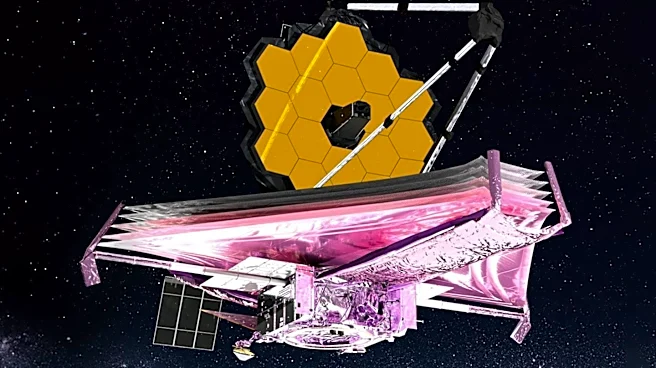
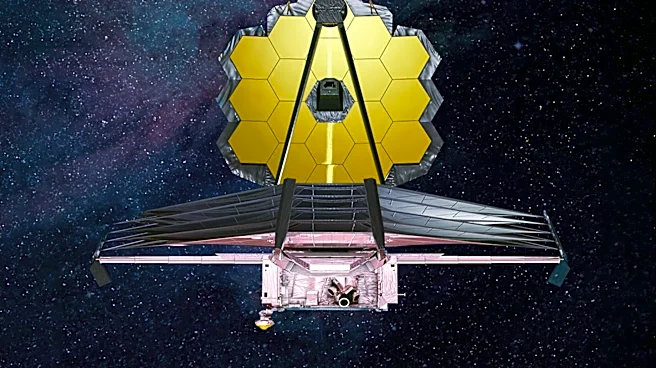
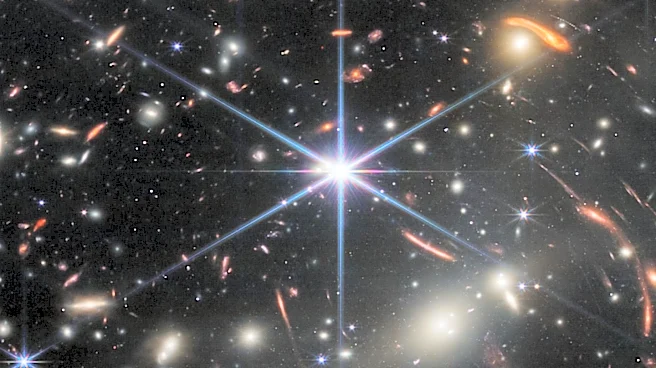
Astronomers utilizing the James Webb Space Telescope (JWST) have identified 39 new brown dwarf candidates in the IC 348 star-forming region, located approximately 1,000 light-years away. Among these, nine have been spectroscopically confirmed as sub-stellar
members of the cluster, meaning they lack sufficient mass to initiate hydrogen fusion. Notably, some of these newly discovered brown dwarfs possess masses as low as two times that of Jupiter, which is merely 0.19% of the Sun’s mass. This finding pushes the boundaries of the known lower mass limit for brown dwarfs. Furthermore, the research team, led by Kevin Luhman from Penn State University and Catarina Alves de Oliveira from the European Space Agency, observed an unusual absorption feature attributed to an unidentified aliphatic hydrocarbon in the spectra of 11 brown dwarfs within IC 348. This consistent presence of the hydrocarbon feature, particularly stronger at fainter magnitudes, has led to the proposal of a new spectral class, designated 'H', for these coolest brown dwarfs. The study, titled 'A New Spectral Class of Brown Dwarfs at the Bottom of the IMF in IC 348,' has been published in The Astrophysical Journal Letters.
Why It's Important?
The discovery of brown dwarfs with masses as low as two Jupiter masses significantly challenges current theoretical models of star formation. These models previously struggled to account for objects of such low mass forming through the gravitational collapse of gas clouds, the same mechanism that creates stars. This new data provides crucial empirical constraints for refining these models, potentially leading to a more comprehensive understanding of how celestial bodies, from the smallest brown dwarfs to the largest stars, originate. The identification of a new spectral class based on the unique hydrocarbon absorption feature also expands our classification system for sub-stellar objects, offering a more nuanced way to categorize and study these enigmatic celestial bodies. Moreover, the observation of circumstellar disks around some of these lightweight brown dwarfs suggests that planet formation can occur even around objects that are themselves barely more massive than planets, blurring the traditional distinctions between stars and planets and opening new avenues for research into planetary system formation.
What's Next?
Future research will likely focus on further characterizing the properties of these newly identified brown dwarfs and the 'H' spectral class. Astronomers will aim to understand the precise composition and formation mechanisms of the unidentified aliphatic hydrocarbon responsible for the unique spectral feature. Continued observations with the JWST and other advanced telescopes will be crucial to confirm the prevalence of these extremely low-mass brown dwarfs and the 'H' class in other star-forming regions. This will help determine if these findings are unique to IC 348 or represent a more universal phenomenon. The presence of protoplanetary disks around some of these brown dwarfs also warrants further investigation to determine if and how planets form in such extreme environments, potentially leading to the discovery of novel types of planetary systems. The ongoing refinement of star formation models based on these new observations will be a key area of theoretical astrophysics.
Beyond the Headlines
This research highlights the continuous evolution of our understanding of the cosmos and the limitations of our current definitions for celestial objects. The blurred lines between 'star' and 'planet' become even more pronounced with the discovery of brown dwarfs that are only twice the mass of Jupiter, yet form through stellar processes and can host their own planetary disks. This challenges the anthropocentric tendency to categorize the universe based on rigid definitions, encouraging a more fluid and adaptable scientific framework. The ability of the JWST to detect such faint and distant objects, and to reveal their intricate chemical compositions, underscores its transformative impact on astronomy. It allows scientists to probe the fundamental processes of cosmic evolution at unprecedented detail, revealing the universe to be far more diverse and complex than previously imagined. This ongoing exploration not only expands our scientific knowledge but also inspires a deeper appreciation for the vast and mysterious nature of space.