








What's Happening?
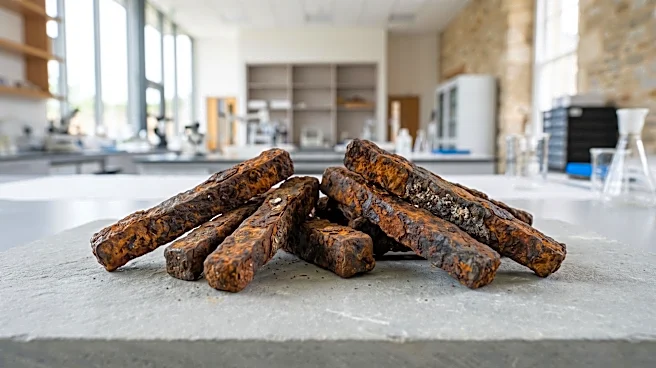
Archaeologists have discovered over 500 Iron Age iron bars in Deinham, Austria, marking the largest known find of its kind in Europe. This 'rusty treasure,' weighing more than a metric ton, was recovered during gravel extraction work in 2019 from an old,
silt-filled channel of the Danube River. Researchers, including Peter Trebsche from the University of Innsbruck, believe the iron bars date back to the third or second century B.C. and were likely lost in a shipwreck. The sheer quantity of iron suggests a significant trade transaction during the Late Iron Age, with enough material to forge approximately 500 swords. The discovery sheds new light on the scale of ancient iron production and trade, which has historically been difficult to measure due to the challenges in dating and identifying iron objects.
Why It's Important?
This discovery is crucial for understanding the economic and technological capabilities of Iron Age societies in Europe. The unprecedented volume of iron bars indicates a sophisticated level of production and trade networks that were previously underestimated. It provides tangible evidence of large-scale material transport along major waterways like the Danube River, highlighting the importance of riverine trade routes in ancient economies. For archaeologists and historians, this find offers a unique opportunity to study prehistoric iron metallurgy and its societal impact. The fact that the gravel workers reported the find to authorities, rather than selling it for scrap, underscores the growing recognition of archaeological heritage and its value beyond monetary worth, ensuring its preservation for scientific study.
What's Next?
Researchers will continue to analyze the iron bars to gain further insights into their origin, composition, and the specific methods of Iron Age iron production. While a shipwreck is the most plausible explanation for the bars' presence in the Danube, further investigations may be conducted to search for any remaining traces of a vessel, despite the challenging river conditions. The findings will likely contribute to broader academic discussions on ancient European trade routes and the economic structures of the Iron Age. This discovery may also encourage more rigorous reporting and preservation efforts for similar accidental finds in other regions, fostering a greater collaboration between industrial operations and archaeological conservation.
Beyond the Headlines
The 'rusty treasure' not only reveals the economic prowess of Iron Age communities but also subtly highlights the enduring human connection to resources and trade. The ability to produce and transport such a large quantity of iron signifies a complex societal organization, including specialized labor, resource management, and established trade relationships. This find challenges previous assumptions about the limitations of ancient technology and logistics, suggesting a more interconnected and industrially capable prehistoric Europe. It also serves as a testament to the often-overlooked contributions of ordinary citizens, like the gravel workers, in preserving historical artifacts that can reshape our understanding of the past.