



What's Happening?
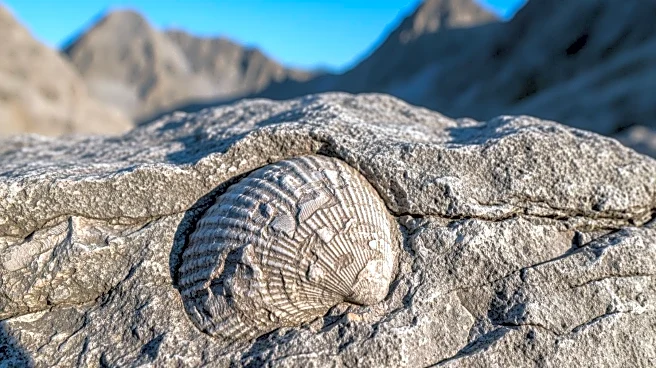
Scientists have discovered marine fossils at the summit of Mount Everest, providing evidence that the mountain was once underwater. This finding is explained by the theory of plate tectonics, which describes the movement of Earth's lithospheric plates.
The Himalayas, including Everest, were formed when the Eurasian and Indian plates collided millions of years ago, pushing marine rock layers to high altitudes. The presence of these fossils indicates that the land was once part of the ocean floor, offering insights into Earth's geological history and the processes that shaped its current landscape.
Why It's Important?
The discovery of marine fossils on Mount Everest highlights the dynamic nature of Earth's surface and the role of plate tectonics in shaping the planet's geography. It provides tangible evidence of the historical changes in Earth's landscape, supporting the scientific understanding of continental drift and mountain formation. This finding also challenges previous misconceptions about the origins of such fossils, emphasizing the importance of scientific inquiry in uncovering Earth's past. The research contributes to the broader understanding of geological processes and the history of life on Earth.
Beyond the Headlines
The presence of marine fossils at high altitudes has sparked interest in the cultural and historical interpretations of such phenomena. Historically, these discoveries were often attributed to mythological events, such as the biblical flood. The scientific explanation provided by plate tectonics offers a more accurate understanding, highlighting the importance of evidence-based research in dispelling myths. This discovery also underscores the interconnectedness of Earth's systems, as changes in one area can have far-reaching impacts on the global environment.