



What's Happening?
The New Deal, initiated by President Franklin D. Roosevelt during the Great Depression, fundamentally reshaped the role of the federal government in American life. This series of reforms, enacted from 1933 to 1938, aimed to provide immediate relief, stimulate
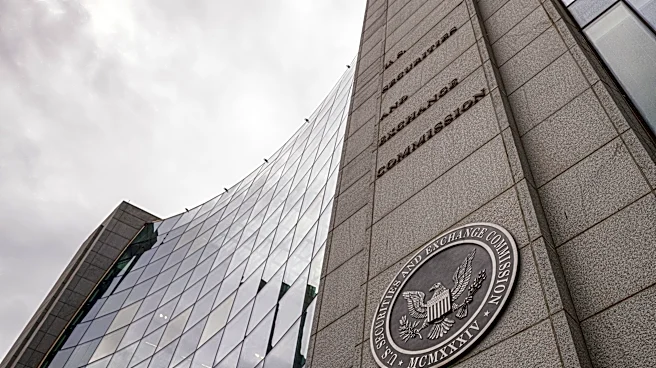
economic recovery, and implement systemic changes. Key initiatives included the Civilian Conservation Corps (CCC), which employed over three million young men in environmental projects, and the Federal Emergency Relief Administration (FERA), which provided direct cash aid to states. The Works Progress Administration (WPA) further expanded infrastructure, art, and literacy efforts, creating millions of jobs. Beyond immediate relief, the New Deal introduced structural reforms such as the Securities and Exchange Act of 1934, establishing the SEC to regulate stock markets, and the Glass-Steagall Act, which separated commercial and investment banking. The Federal Deposit Insurance Corporation (FDIC) was created to insure bank deposits, and the Federal Housing Administration standardized mortgages. These measures aimed to prevent future economic collapses and restore public confidence in financial institutions.
Why It's Important?
The New Deal's reforms were crucial in stabilizing the American economy and establishing a social safety net that continues to impact the nation. The creation of regulatory bodies like the SEC and FDIC significantly reduced systemic fragility in the financial sector, laying the groundwork for post-war economic expansion. These institutions instilled greater transparency and trust in financial markets, protecting investors and depositors. Furthermore, the New Deal permanently altered labor rights with the National Labor Relations Act of 1935, guaranteeing collective bargaining power, and the Fair Labor Standards Act of 1938, which established minimum wage and child labor standards. The introduction of Social Security in 1935 marked a pivotal shift, establishing federal relief as a right rather than charity, providing pensions for the elderly and unemployment insurance. This expansion of governmental responsibility redefined the social contract between citizens and the state, creating expectations for federal intervention during crises and in supporting societal well-being.
What's Next?
The institutional frameworks established by the New Deal have endured for decades, shaping the modern administrative state. While the direct programs of the New Deal have evolved or been replaced, its core principles of federal regulation, social welfare, and government intervention during economic downturns remain influential. Future policy debates often reference the New Deal's legacy when discussing the appropriate scope of government involvement in the economy and social programs. The ongoing discussion about economic inequality, financial regulation, and social safety nets frequently draws parallels to the challenges addressed by the New Deal. The expectation that the federal government will play a significant role in addressing national crises, whether economic or social, is a direct continuation of the precedent set by Roosevelt's administration. The long-term impact of these reforms continues to be a subject of study and debate among economists and historians, particularly regarding their role in ending the Great Depression and fostering long-term stability.
Beyond the Headlines
The New Deal's impact extends beyond economic and social policy, deeply influencing American political culture and the public's perception of government. It fostered a belief that the government has a responsibility to protect its citizens from economic hardship and to ensure a basic standard of living. This shift from a more limited government role to an active protector fundamentally altered citizens' expectations. Ethically, the New Deal raised questions about individual liberty versus collective welfare, and the balance of power between federal and state governments. Legally, it expanded the interpretation of the Commerce Clause and established precedents for federal regulatory authority. Culturally, programs like the Works Progress Administration's Federal Writers’ Project not only provided employment but also preserved regional histories, enriching American culture and fostering a sense of national identity. The New Deal's legacy is a testament to how bold policy can reshape societal norms and governmental functions, proving that government can lead in sustaining and strengthening society beyond mere emergency response.