

What's Happening?
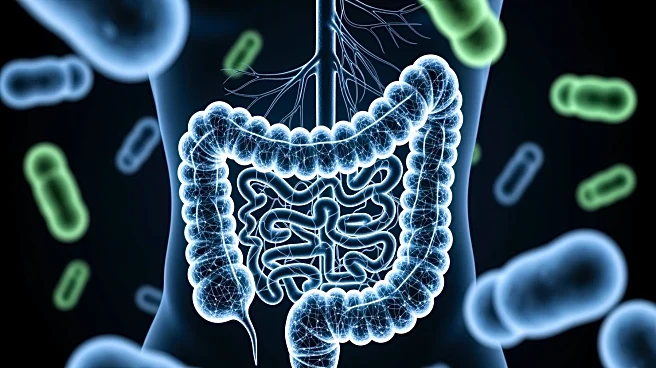
A consortium of researchers from Helmholtz Munich, Ludwig Maximilians University, and other international partners has uncovered a novel mechanism by which gut bacteria communicate with human cells. The study, published in Nature Microbiology, reveals
that certain gut bacteria can inject proteins directly into human cells, influencing immune responses. This discovery highlights a previously unknown interaction between the gut microbiome and the human body, potentially explaining how changes in gut bacteria contribute to inflammatory diseases like Crohn's disease. The research involved mapping over a thousand interactions between bacterial and human proteins, showing that bacterial proteins target human pathways involved in immune regulation and metabolism. This finding challenges the traditional view of commensal bacteria as passive residents, suggesting they actively manipulate human cells.
Why It's Important?
This discovery is significant as it provides a deeper understanding of the gut microbiome's role in human health, particularly in immune regulation and inflammatory diseases. By identifying the molecular mechanisms through which gut bacteria influence human cells, the study shifts the focus from correlation to causation in microbiome research. This could lead to new therapeutic strategies for managing autoimmune diseases like Crohn's disease, where current treatments involve inhibiting cytokine activity. Understanding these interactions may also pave the way for more precise disease prevention and treatment strategies, potentially benefiting millions of individuals affected by inflammatory bowel diseases.
What's Next?
Future research will aim to explore how individual bacterial effector-host interactions function in specific tissues and disease contexts. The goal is to translate these insights into more precise strategies for disease prevention and treatment. Researchers are also interested in determining whether these bacterial injection systems evolved for pathogenic purposes or if they originally supported commensal coexistence. This could lead to a broader understanding of microbiome-host interactions and their implications for human health.
Beyond the Headlines
The study raises intriguing questions about the evolution of bacterial injection systems and their role in human health. It suggests that these systems, previously thought to exist only in pathogenic bacteria, may have originally evolved to support beneficial interactions between commensal bacteria and human hosts. This perspective could lead to a reevaluation of the microbiome's role in health and disease, potentially influencing future research and therapeutic approaches.