





What's Happening?
The Oregon Department of Transportation (ODOT) has acknowledged that weather conditions could impact the five-week Interstate 5 Rose Quarter closure timeline in Portland. The southbound closure is scheduled to begin on September 11. ODOT officials have
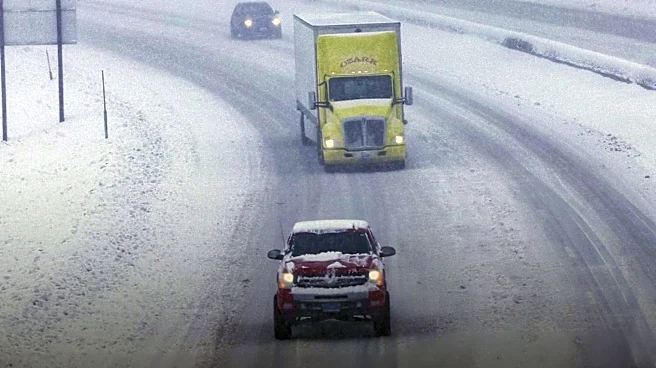
stated that while crews have developed a detailed, hour-by-hour work plan with contingency measures, weather remains an uncontrollable risk. David Kim, ODOT’s project delivery manager, indicated that if adverse weather conditions arise, additional contingency plans might be necessary, and the public would be informed through a joint information center. Despite this, ODOT's primary goal is to complete the work within the five-week timeframe and reopen I-5 as soon as possible.
Why It's Important?
The I-5 Rose Quarter closure is a major infrastructure project with significant implications for transportation and commerce in Portland and the wider Pacific Northwest. I-5 is a critical artery for both local commuters and regional freight. Any delays caused by weather could lead to prolonged traffic congestion, increased travel times, and potential economic disruptions for businesses reliant on timely transportation of goods and services. The project aims to improve safety and efficiency, but extended closures could cause frustration for the public and impact the local economy. ODOT's transparency about potential weather-related delays is important for managing public expectations and allowing commuters and businesses to plan accordingly, highlighting the inherent challenges of large-scale urban infrastructure projects.
What's Next?
ODOT will proceed with the southbound I-5 Rose Quarter closure starting September 11, adhering to its five-week target. The agency will closely monitor weather conditions throughout the construction period. Should weather-related challenges arise that threaten the timeline, ODOT has committed to communicating any necessary contingency plans to the public via its joint information center. Commuters and businesses should stay informed through official ODOT channels for real-time updates on the project's progress and any potential delays. The successful completion of the project within or close to the planned timeframe will be crucial for minimizing disruption and realizing the intended benefits of the infrastructure improvements.
Beyond the Headlines
The vulnerability of major infrastructure projects to weather conditions, as highlighted by the I-5 closure, points to broader challenges in urban planning and climate resilience. As climate change leads to more unpredictable and extreme weather events, infrastructure projects will increasingly need to incorporate robust contingency planning and adaptive strategies. This situation also underscores the delicate balance between necessary urban development and the daily lives of residents and businesses. The reliance on a single major interstate like I-5 for regional connectivity exposes systemic vulnerabilities that could prompt discussions about diversifying transportation networks, investing in public transit alternatives, and promoting remote work options to reduce dependency on single points of failure. Ultimately, this project serves as a reminder of the complex interplay between natural forces, human-made systems, and the need for resilient urban design in the face of environmental uncertainties.