






What's Happening?
A new study conducted by researchers at the University of Queensland has identified a hidden danger in takeaway coffee cups: the release of microplastic particles into hot beverages. The study examined single-use cups lined with either fossil-based polyethylene
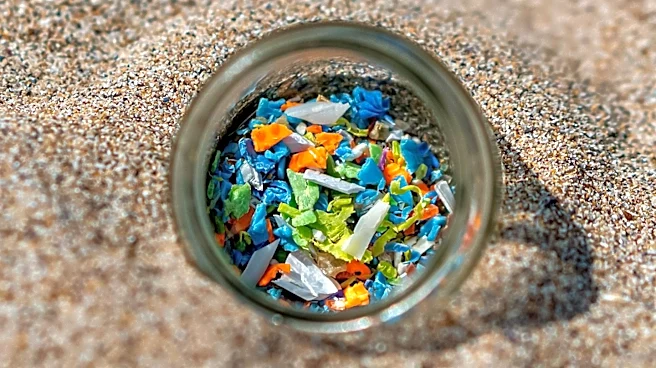
(PE) or the biodegradable alternative polylactic acid (PLA). Dr. Elvis Okoffo, one of the researchers, stated that both types of cups released microplastics, with biodegradable plastic-lined cups releasing 12 times more particles. Specifically, PLA-lined cups released approximately 4.3 million particles per milliliter, while PE-lined cups released 2.7 million particles per milliliter when exposed to hot water. These microplastic nanoparticles are thousands of times thinner than a human hair. The study highlights that paper cups are not entirely plastic-free, as they are often lined with a thin plastic layer to make them water-resistant and provide structural integrity. While the study does not suggest that paper cups are completely unsafe or that their use should cease entirely, it encourages consumers to consider alternatives.
Why It's Important?
This research is important because it sheds light on a previously under-recognized source of microplastic exposure for consumers in the U.S. and globally. Millions of people regularly use single-use takeaway coffee cups, and the continuous ingestion of microplastics could have long-term health implications, though further research is needed to fully understand these effects. The finding that biodegradable plastic-lined cups release significantly more microplastics challenges the perception that these alternatives are inherently safer or more environmentally friendly. This could influence consumer choices and drive demand for truly plastic-free or reusable options. For manufacturers, the study underscores the need to develop cup linings that release fewer plastic particles, potentially spurring innovation in sustainable packaging materials. The widespread use of these cups means that even small amounts of microplastic release can lead to significant cumulative exposure across the population, making this a public health and environmental concern.
What's Next?
Following these findings, consumers are encouraged to adopt more sustainable practices, such as carrying their own reusable cups made from materials like insulated stainless steel, tempered glass, or ceramic. This shift could lead to a decrease in demand for single-use cups and a corresponding increase in the market for reusable alternatives. Manufacturers of takeaway cups will likely face increased pressure to innovate and develop new lining materials that do not release microplastics, or to improve existing biodegradable options to reduce particle shedding. Regulatory bodies may also begin to consider guidelines or standards for microplastic release from food and beverage packaging, potentially leading to new industry regulations. Further research will be crucial to understand the long-term health impacts of ingesting these microplastics and to guide future policy and product development.
Beyond the Headlines
The study's implications extend beyond immediate health concerns, touching upon broader environmental and ethical considerations. The revelation that 'biodegradable' cups release more microplastics than traditional plastic-lined ones highlights a critical flaw in current sustainability narratives and product labeling. This could lead to increased scrutiny of products marketed as eco-friendly, prompting consumers and regulators to demand more rigorous testing and transparent disclosure of environmental impacts. The pervasive nature of microplastics, now found in everyday items like coffee cups, underscores the challenge of plastic pollution and its infiltration into human consumption chains. This situation calls for a re-evaluation of material science and waste management strategies, emphasizing a circular economy approach where products are designed for multiple uses or complete biodegradability without harmful byproducts. The ethical responsibility of companies to ensure the safety and true environmental friendliness of their products will likely come under greater public and regulatory pressure.