
What's Happening?
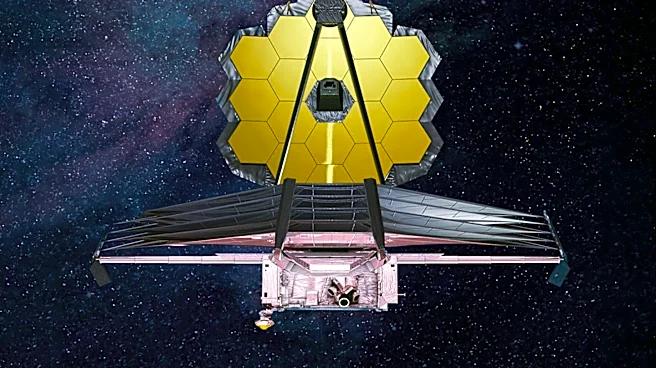
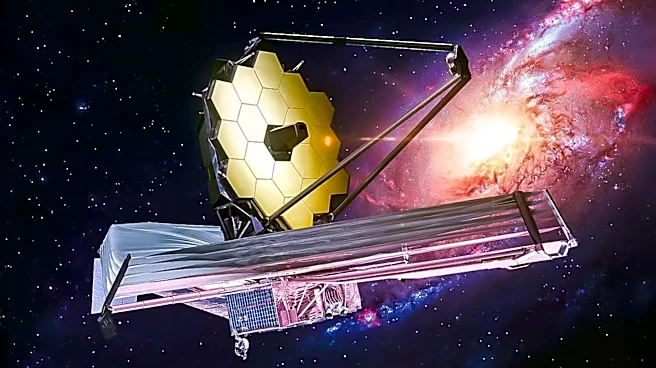
Astronomers using the James Webb Space Telescope have detected potential signs of gases on the exoplanet K2-18 b, which are associated with marine microbes on Earth. This discovery has led to significant
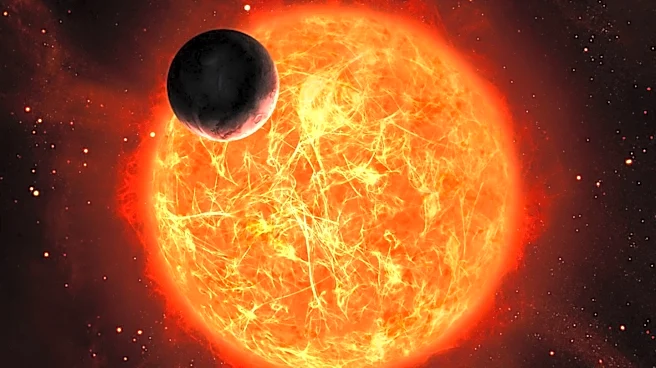
debate within the scientific community regarding the presence of dimethyl sulphide (DMS) and dimethyl disulphide (DMDS) in the planet's atmosphere. K2-18 b, located 124 light-years away, has been proposed as a 'Hycean' world with a deep ocean beneath a hydrogen-rich atmosphere. However, the existence of these gases and their implications for life remain uncertain, as the data is not definitive and further observations are needed.
Why It's Important?
The potential detection of biosignatures on K2-18 b is significant as it could provide insights into the possibility of life beyond Earth. The debate highlights the challenges in interpreting atmospheric data from distant exoplanets and underscores the need for more advanced observational techniques. If confirmed, the presence of DMS and DMDS could suggest biological processes, although non-biological explanations are also possible. This discovery could influence future research priorities and funding in the field of astrobiology, as scientists seek to understand the conditions that might support life on other planets.
What's Next?
Further observations and analyses are required to confirm the presence of DMS and DMDS on K2-18 b. Researchers will likely continue to refine their models and use additional data from the James Webb Space Telescope to better understand the planet's atmosphere. The scientific community may also explore other potential biosignatures and investigate similar exoplanets to build a more comprehensive picture of habitability beyond our solar system.