






What's Happening?
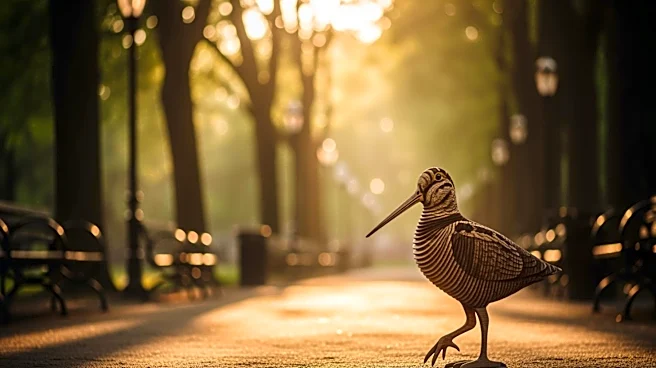
American woodcocks have become a popular attraction in Bryant Park, Manhattan, as they make their annual migration north. Known for their distinctive bobbing walk and kazoo-like calls, these birds have captivated New Yorkers and tourists alike. The woodcocks,
often referred to as 'timberdoodles' or 'bogsuckers,' have been drawing large crowds since their arrival in late March. Bird enthusiasts and curious onlookers gather daily to observe the birds' unique behavior, which includes a shimmying walk that has gone viral on social media. This behavior is thought to be a foraging technique or an antipredator display. The woodcocks' presence in the park offers an opportunity to educate the public about the challenges these birds face, such as collisions with building glass and light pollution.
Why It's Important?
The woodcocks' popularity highlights the growing interest in urban wildlife and the importance of conservation efforts in city environments. As these birds face threats from urbanization, such as glass collisions and light pollution, their presence in a major city park underscores the need for public awareness and protective measures. The attention they receive can foster a greater appreciation for biodiversity and the challenges faced by migratory species. Additionally, the woodcocks' migration through New York City provides a unique opportunity for urban residents to connect with nature, potentially inspiring conservation actions and policy changes to protect urban wildlife habitats.
What's Next?
The woodcocks are expected to continue their migration north by mid-April. During their stay, conservationists and naturalists are likely to use this opportunity to further educate the public on the importance of reducing light pollution and making urban environments safer for migratory birds. The increased public interest may lead to more community-driven conservation initiatives and collaborations with city planners to create bird-friendly urban spaces. As awareness grows, there may be increased advocacy for policies that mitigate the impact of urbanization on wildlife.