




What's Happening?
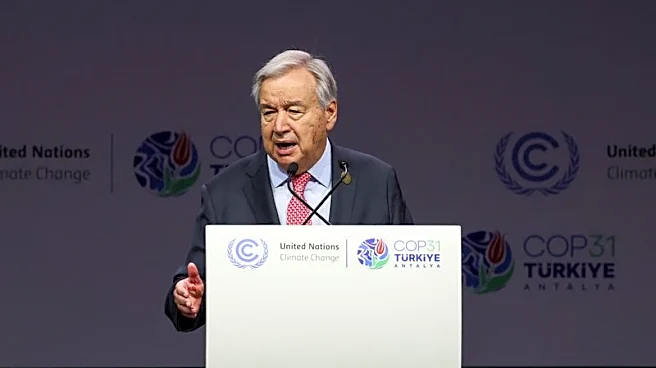
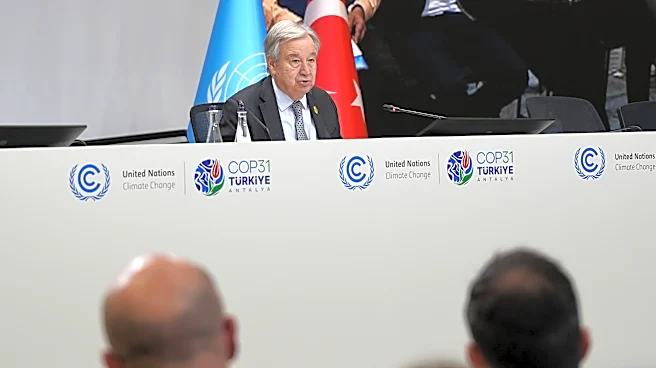
International Organization for Migration (IOM) Director General Amy Pope issued a warning on Friday that over 200 million individuals are at risk of displacement from their homes due to the escalating impacts of climate change. Speaking on the sidelines
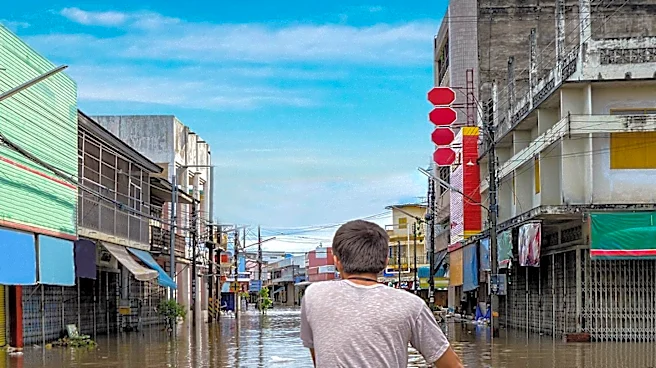
of the United Nations Climate Change Conference (COP31) in Antalya, Turkey, Pope highlighted that these individuals reside in communities highly vulnerable to climate-related events. She emphasized that climate-related population movements are projected to increase significantly unless immediate actions are taken to mitigate these risks. Pope also criticized the current allocation of billions of dollars towards border security, arguing that the underlying causes of displacement are not receiving adequate attention or funding. According to IOM data, nearly 30 million people were displaced in 2025 alone due to climate-related disasters such as storms, droughts, wildfires, extreme heatwaves, and floods.
Why It's Important?
This warning from the IOM underscores a critical and growing humanitarian crisis with significant global implications, including for the United States. While the immediate focus is on vulnerable communities worldwide, the U.S. is not immune to the ripple effects of mass displacement, which can include increased pressure on international aid, potential shifts in migration patterns, and geopolitical instability. The IOM's call for increased investment in climate adaptation and addressing root causes, rather than solely focusing on border controls, challenges current policy approaches in many nations, including the U.S., which often prioritize security measures. A failure to address these root causes could lead to more complex and costly humanitarian responses in the future, potentially impacting U.S. foreign policy, aid budgets, and domestic resource allocation as it grapples with its own climate-induced migration challenges.
What's Next?
The IOM's statements are likely to intensify discussions at international forums like COP31 regarding climate finance and adaptation strategies. The organization advocates for a shift in global spending priorities, urging nations to invest more in strengthening the resilience and stability of communities most exposed to climate risks. This could lead to increased pressure on developed nations, including the U.S., to commit more resources to climate adaptation funds and programs in vulnerable countries. Furthermore, the IOM's emphasis on the link between climate-induced migration and conflict suggests that future policy discussions will need to integrate climate action with peacebuilding and humanitarian efforts. The ongoing data collection by IOM on climate-related displacements will continue to inform these discussions and potentially influence future international agreements and national policies.
Beyond the Headlines
The IOM's critique of current spending priorities highlights a deeper ethical and policy dilemma: whether to address the symptoms of climate migration through border security or its root causes through adaptation and development. This debate has profound implications for international law, human rights, and the concept of national sovereignty in an era of global environmental change. The increasing frequency and intensity of climate disasters challenge traditional notions of migration, suggesting that a new framework may be needed to address 'climate refugees' or 'environmentally displaced persons.' The long-term implications could include a re-evaluation of international aid structures, a greater emphasis on preventative measures, and potentially new legal protections for those forced to move due to environmental degradation, prompting a re-examination of U.S. immigration and foreign policy.