
What's Happening?
The U.S. Energy Information Administration (EIA) has released new data indicating that renewable energy sources accounted for more than 30% of the total U.S. electricity generation in the first five months
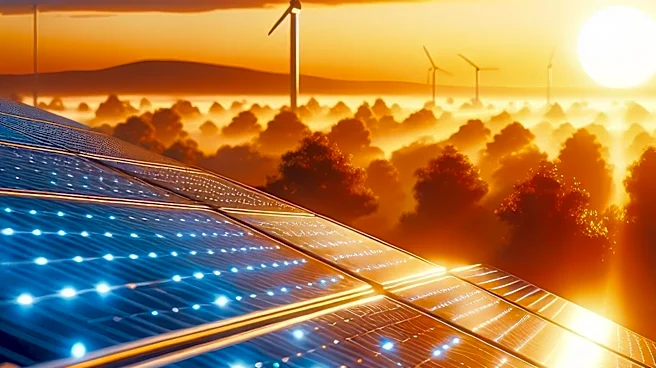
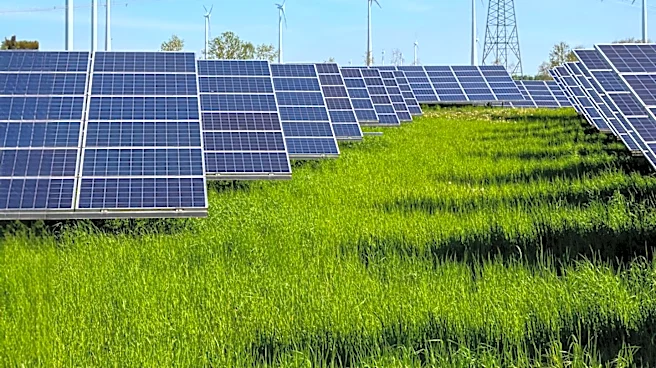
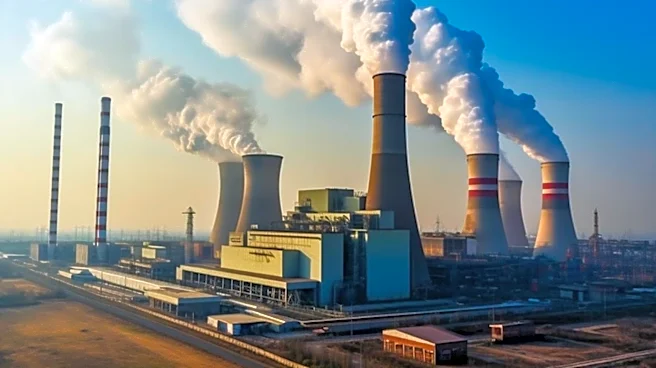
of 2026. This marks a significant increase of over 10% compared to the same period in 2025. The growth was primarily driven by utility-scale solar, which saw a 21.6% increase, and small-scale solar, which grew by 12.8%. Wind energy also contributed with a 4.8% increase. In contrast, the output from coal facilities decreased by 10.9%, while nuclear and natural gas plants saw minimal growth of 1.3% and 2.5%, respectively. The EIA projects that by May 2027, solar, wind, and battery storage will add approximately 83 gigawatts of new generating capacity, while fossil fuel and nuclear power capacity are expected to decline by nearly 4.7 gigawatts.
Why It's Important?
This shift towards renewable energy is crucial for the U.S. as it seeks to reduce its carbon footprint and transition to more sustainable energy sources. The increase in renewable energy capacity not only supports environmental goals but also enhances energy security by diversifying the energy mix. The decline in coal usage and the slow growth of nuclear and natural gas highlight a significant shift in the energy landscape, potentially leading to reduced greenhouse gas emissions. This transition could also stimulate economic growth in the renewable energy sector, creating jobs and fostering technological innovation.
What's Next?
Looking ahead, the EIA forecasts continued growth in renewable energy capacity, with utility-scale solar expected to expand significantly. The increase in battery storage capacity by nearly 48% by June 2027 will further support the integration of renewable energy into the grid. As renewables continue to grow, they are likely to surpass natural gas in generating capacity by spring 2027. This ongoing transition may prompt policy adjustments and increased investment in renewable infrastructure to support the growing demand and ensure grid reliability.
Beyond the Headlines
The rapid growth of renewable energy sources underscores a broader cultural and economic shift towards sustainability. This transition may influence public policy, encouraging further investment in clean energy technologies and infrastructure. Additionally, the decline in coal usage could have socio-economic impacts on regions dependent on coal mining, necessitating workforce retraining and economic diversification strategies. The increasing reliance on renewables also raises questions about energy storage and grid management, highlighting the need for continued innovation in these areas.