









What's Happening?
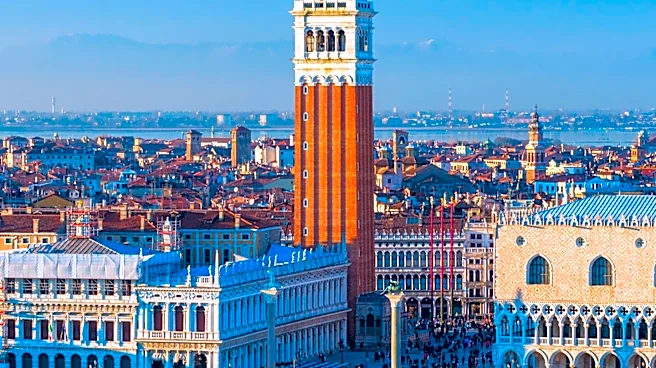
Venice is taking significant measures to address extreme overtourism by increasing tourist charges and limiting visitor numbers. The local government has adopted a firm stance to mitigate the damage caused to its historic canals and infrastructure. Previously,
the absence of border controls led to an influx of tourists. Now, strict ticketing systems and entry charges are in place, requiring visitors to book well in advance or face substantial fees. This strategy aims to control the number of tourists, particularly day-trippers, to protect delicate heritage sites. This approach has been successful globally in deterring short-term visits. Venice, along with Amsterdam, Barcelona, and Dubrovnik, is identified as a region severely affected by overtourism, exacerbated by visa-free travel policies.
Why It's Important?
The implementation of stricter visitor fees and capacity caps in Venice highlights a growing global challenge for popular tourist destinations: balancing vital tourism revenue with the urgent need for preservation and local livability. Unrestricted access has led to unprecedented environmental and structural strain, rapid resident displacement, and ecological degradation. The measures aim to internalize the public utility costs generated by short-visit travelers and to fund high-cost urban maintenance, such as canal dredging and historic bridge repair. This shift in policy reflects a broader recognition that high visitor numbers alone cannot be the sole metric of economic success; long-term livability, infrastructure protection, and authentic cultural preservation are equally crucial. The success of these strategies could provide a blueprint for other cities grappling with similar issues, influencing future tourism policies and urban management practices worldwide.
What's Next?
Venice's new policies are expected to continue evolving as authorities monitor their effectiveness in managing tourist flow and protecting the city's heritage. The city will likely refine its ticketing systems and entry charges based on real-time mobility data to optimize urban management. Other heavily touristed cities, such as Amsterdam, Barcelona, and Dubrovnik, are also implementing their own mitigation strategies, including hotel construction bans, higher tourist taxes, and the elimination of short-term rental licenses. These ongoing efforts suggest a future where popular destinations will increasingly adopt economic policy frameworks, such as tiered surcharges and capacity controls, to manage tourism revenues and internalize social and environmental costs. Travelers will need to plan ahead and potentially pay more to visit these iconic locations, fostering a more sustainable and respectful tourism model.
Beyond the Headlines
The shift in Venice's tourism policy reflects a deeper societal debate about the ethics of mass tourism and its impact on local communities and cultural heritage. The measures challenge the traditional model of unchecked consumption in travel, advocating for a more balanced and respectful system. This move could trigger a broader re-evaluation of tourism's role in urban economies, pushing for policies that prioritize the well-being of residents and the preservation of historical sites over sheer visitor volume. It also raises questions about the responsibility of tourists to understand and respect the delicate ecosystems and social fabrics of the places they visit. The long-term implications could include a redefinition of 'sustainable tourism,' where cultural authenticity and environmental integrity become central to the travel experience, potentially leading to a more conscious and responsible global travel industry.