




What's Happening?
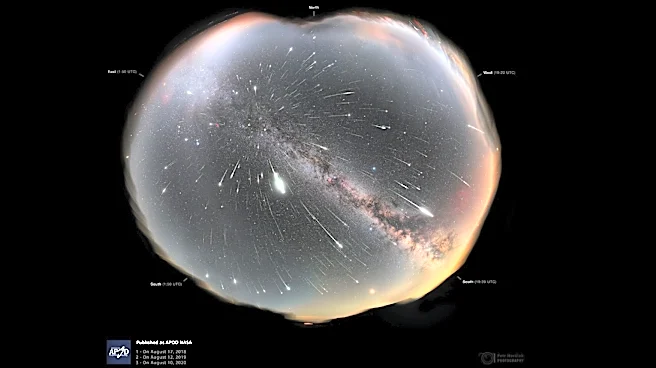
Pennsylvania stargazers are set to witness two overlapping meteor showers this month, with the Alpha Capricornid meteor shower known for its bright fireballs. According to AccuWeather meteorologist Alyssa Glenny, the shower, caused by Comet 169P/NEAT,
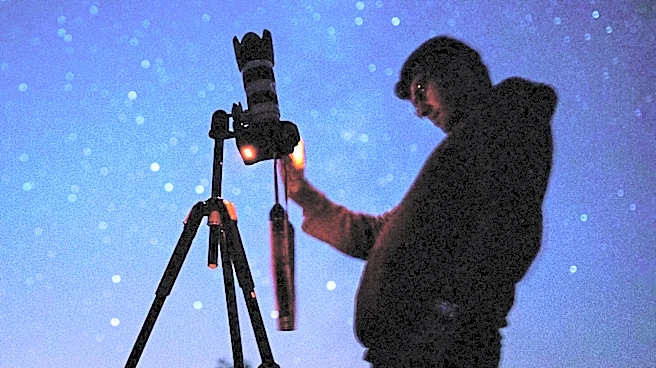
will produce spectacular views due to large dust particles and fragments. The Alpha Capricornid shower began on July 3 and will last until August 15, while the Southern Delta Aquariids will be active from July 12 to August 23. These showers could result in up to 30 meteors per hour under optimal conditions. The best viewing time is from 11 p.m. on July 30 to dawn on July 31, coinciding with the peak of the Alpha Capricornid shower. Observers are advised to find dark skies and avoid city lights for the best experience.
Why It's Important?
The meteor showers offer a unique opportunity for public engagement with astronomy, potentially boosting interest in space science and related educational activities. Events like these can inspire both amateur and professional astronomers, fostering a greater appreciation for celestial phenomena. Additionally, such natural events can have economic benefits for local communities, as they attract tourists and stargazers, potentially increasing revenue for local businesses. The showers also provide a platform for educational institutions and astronomy clubs to host events, promoting community involvement and scientific literacy.
What's Next?
Following the meteor showers, Pennsylvania residents can look forward to several more celestial events throughout the year, including the Perseids in August and the Orionids in October. The Central Pennsylvania Observers will host a public stargazing event on July 11 at the Penn State Arboretum, offering an opportunity for community engagement and education. These events are expected to continue fostering interest in astronomy and space science, encouraging more people to participate in future stargazing activities.