










What's Happening?
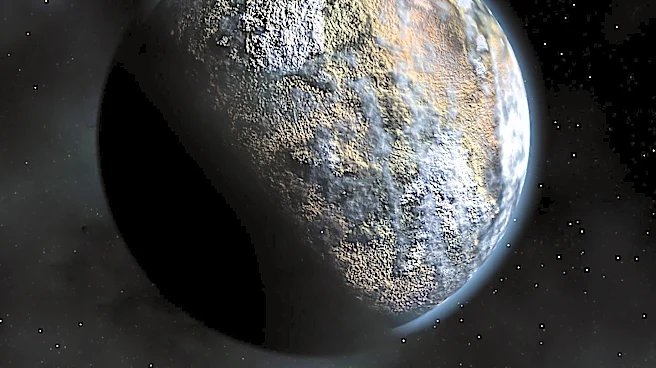
Astronomers have detected an atmosphere around the rocky exoplanet LHS 1140 b, located 48 light-years from Earth in its star's habitable zone. This discovery marks the first time an atmosphere has been found on a rocky planet in such a zone, suggesting
it could retain an atmosphere for billions of years. The planet, first discovered in 2017, shows signs of helium escaping from its atmosphere, indicating it has managed to hold onto its gaseous envelope despite orbiting an active red dwarf star. This finding, published in Science, opens new avenues in the search for potentially habitable planets.
Why It's Important?
The detection of an atmosphere on LHS 1140 b is a significant step in the search for extraterrestrial life, as an atmosphere is crucial for supporting life as we know it. This discovery suggests that rocky planets around red dwarf stars, which are common in the galaxy, might be able to maintain atmospheres despite harsh stellar conditions. It provides a new target for future studies aimed at understanding the conditions necessary for life beyond Earth, potentially guiding the search for habitable worlds.
What's Next?
Future observations will aim to determine the composition of LHS 1140 b's atmosphere and whether liquid water exists on its surface. These studies will help assess the planet's habitability and provide insights into the potential for life. The discovery also encourages further exploration of rocky planets around red dwarf stars, which could reveal more about the diversity of planetary environments in the universe.