


What's Happening?
Scientists at Scripps Research in La Jolla have made significant strides in understanding how the body processes touch. The study, led by molecular biologist and neuroscientist Ardem Patapoutian, focuses on two proteins, PIEZO1 and PIEZO2, which act as
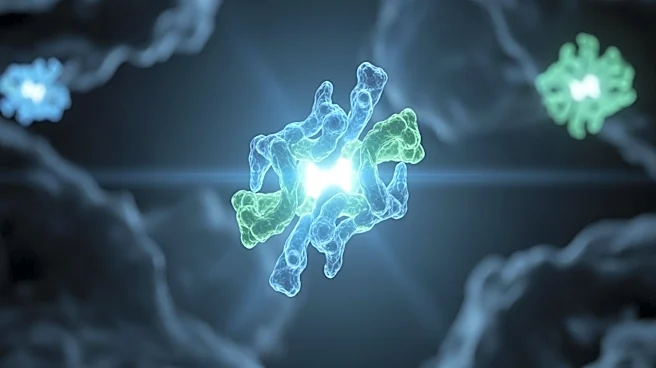
'protein gates' that open in response to mechanical force. While PIEZO1 responds to broad mechanical stresses, PIEZO2 is specifically a key sensor for touch. The research, published in the journal Nature, utilized advanced microscopy techniques to observe these proteins at a nanometer scale, providing unprecedented insights into their function. The study highlights how PIEZO2 changes shape when force is applied, linking structural changes to activity within the ion channel. This research could pave the way for a better understanding of sensory disorders.
Why It's Important?
This research is crucial as it enhances the understanding of how humans perceive mechanical force, a fundamental aspect of the sensory nervous system. The findings could have significant implications for medical science, particularly in diagnosing and treating sensory disorders. By understanding the molecular mechanisms of touch, scientists can develop better therapeutic strategies for conditions where these processes are disrupted. The study also underscores the importance of advanced imaging techniques in biological research, potentially influencing future studies in neuroscience and physiology.
What's Next?
The next steps for this research could involve exploring the therapeutic applications of these findings. Scientists may investigate how manipulating PIEZO2 could alleviate symptoms of sensory disorders. Further studies might also explore the role of these proteins in other physiological processes, potentially leading to broader medical applications. Collaboration with clinical researchers could accelerate the translation of these findings into practical treatments.
Beyond the Headlines
The study not only advances scientific understanding but also highlights the ethical considerations of manipulating sensory perception. As research progresses, it will be important to consider the implications of altering sensory experiences, particularly in terms of consent and the potential for misuse. Additionally, this research could influence the development of technologies that mimic human touch, impacting fields such as robotics and prosthetics.