
What's Happening?
A recent study has revealed that a 7 million-year-old fossil, Sahelanthropus tchadensis, may have walked upright, suggesting it could be the earliest known hominin. The discovery was made by analyzing
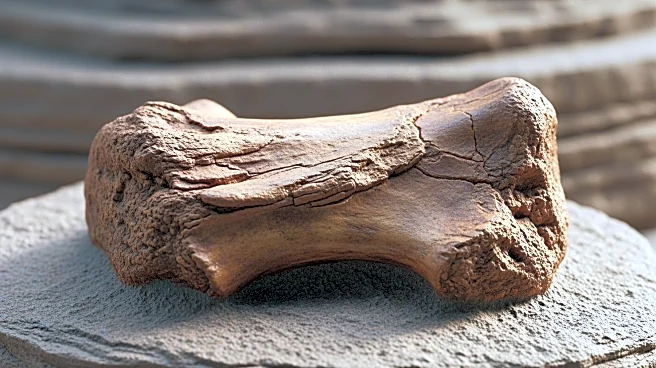
a femoral tubercle, a bump on the leg bone, which is characteristic of bipedalism. This finding supports the idea that S. tchadensis was part of the human lineage, as walking on two legs is a defining trait of hominins. The fossil, discovered in Chad, has been a subject of debate since its initial description in 2002, with some scientists questioning its classification as a hominin.
Why It's Important?
This discovery could reshape our understanding of human evolution, particularly the timeline and characteristics of early hominins. If S. tchadensis is confirmed as a hominin, it would push back the date of bipedalism in human ancestors, providing new insights into the evolutionary split between humans and chimpanzees. This could influence future research on human origins and the environmental factors that drove evolutionary changes. The study also highlights the importance of re-examining existing fossils with new technologies, which could lead to further breakthroughs in paleoanthropology.
What's Next?
Further research is needed to confirm the classification of S. tchadensis as a hominin. This may involve additional fossil discoveries and advanced imaging techniques to analyze existing specimens. The scientific community will likely engage in discussions about the implications of this finding for the understanding of human evolution. Future studies may focus on the environmental and ecological conditions that influenced the development of bipedalism in early hominins.