
What's Happening?
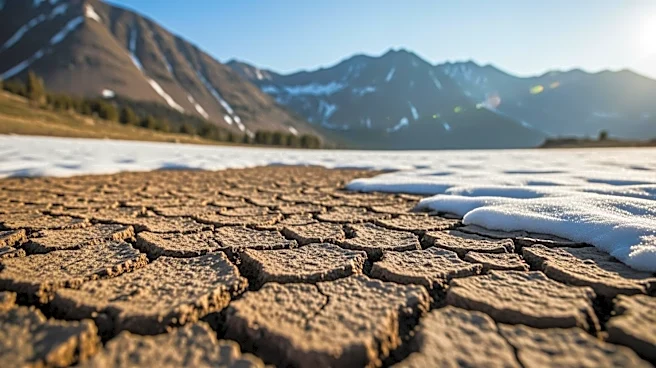
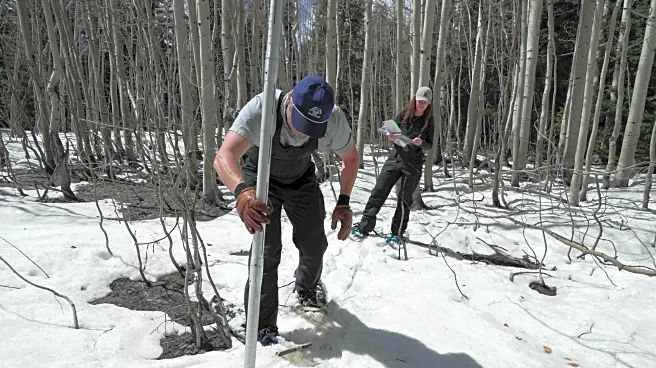
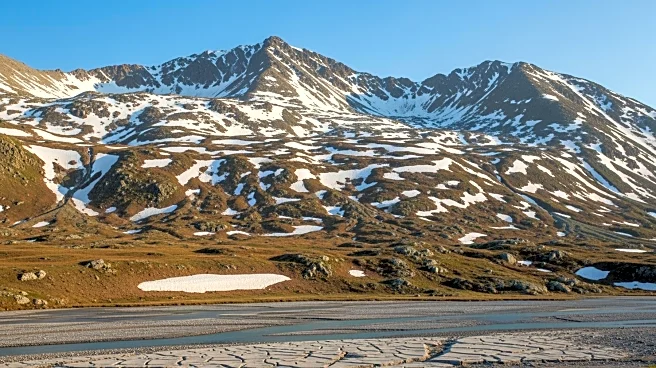
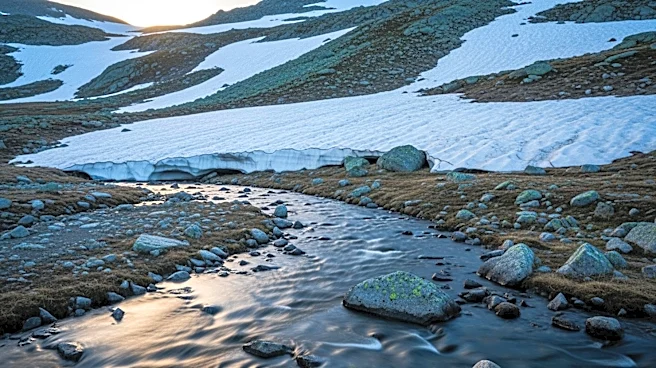
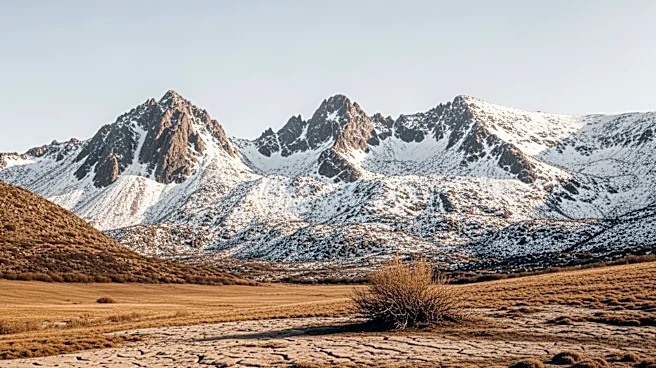
Colorado is experiencing its worst year for snowpack in recorded history, with the water equivalent in the snowpack at just 22% of the historic median as of April 1. This marks a significant decrease from
previous years, with the average liquid water stored in the snow down to 3.1 inches, compared to 9.1 inches in 2012. The rapid melting of snowpack is attributed to record-high temperatures in March, with some areas experiencing a full week of unprecedented heat. The Colorado Climate Center's assessment highlights the severe drought conditions facing the state, exacerbated by climate change and unusual weather patterns.
Why It's Important?
The record low snowpack in Colorado has far-reaching implications for water resources, agriculture, and wildfire risk. Snowpack is a critical source of water for the state, and its depletion threatens water availability for communities, agriculture, and ecosystems. The situation also raises concerns about increased wildfire risk as dry conditions persist. The findings underscore the impact of climate change on regional weather patterns and the urgent need for adaptive water management strategies. Addressing these challenges will require coordinated efforts among policymakers, water managers, and communities to ensure sustainable water use and mitigate the effects of drought.
What's Next?
As Colorado faces ongoing drought conditions, state and local authorities may implement water conservation measures and explore alternative water sources. Efforts to enhance water storage and distribution infrastructure could be prioritized to address potential shortages. Additionally, the situation may prompt increased investment in climate resilience initiatives, such as forest management and wildfire prevention. Monitoring and research will continue to assess the impact of climate change on snowpack and water resources, informing future policy decisions. Public awareness and engagement will be crucial in promoting sustainable water practices and supporting community resilience.