









What's Happening?
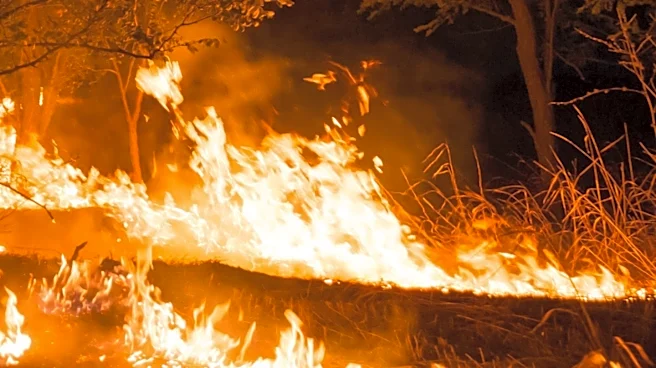
The Colorado Springs Fire Department (CSFD) successfully and rapidly contained a grass fire that erupted near E Fountain Blvd. and S Union Blvd. on Friday night. The flames were visible from I-25 on the MLK Bypass, prompting a swift response from multiple
fire crews. CSFD first reported the incident at 9:02 p.m. and declared the fire contained just nine minutes later, at 9:11 p.m. Firefighters utilized at least one drone to monitor the progress of the blaze and guide ground operations, ensuring efficient and effective control of the situation. The quick containment prevented the fire from spreading further and posing a larger threat to the surrounding area.
Why It's Important?
The rapid containment of the grass fire by the Colorado Springs Fire Department highlights the critical importance of efficient emergency response and modern firefighting techniques. Given the ongoing dry conditions in El Paso County, as reported by the U.S. Drought Monitor, even small grass fires can quickly escalate into significant threats. The use of drone technology by CSFD demonstrates an advanced approach to incident management, providing real-time aerial surveillance that aids in strategic decision-making and resource deployment. This quick action not only protected property and potentially lives but also prevented a larger environmental impact, which is particularly crucial in a region prone to drought and wildfire risks. The incident underscores the value of well-trained personnel and technological integration in urban and wildland-urban interface firefighting.
What's Next?
While this specific grass fire was quickly contained, the underlying conditions that contribute to such incidents, particularly the dry weather and drought in El Paso County, persist. Local authorities and fire departments will likely remain on high alert, especially during periods of increased wind or continued dry spells. Public awareness campaigns regarding fire safety and prevention, such as proper disposal of flammable materials and adherence to burn bans, may be reinforced. The successful use of drones in this incident could also lead to further integration of such technologies in future emergency responses, enhancing the capabilities of fire departments in monitoring and managing blazes. Continued vigilance from both emergency services and the community will be essential to mitigate future fire risks.
Beyond the Headlines
The swift containment of this grass fire, while a localized event, points to a broader trend in fire management strategies, particularly in regions susceptible to wildfires. The integration of drones into firefighting operations represents a significant technological advancement, offering a safer and more comprehensive view of fire perimeters and hot spots than traditional ground-based methods. This technological shift not only improves operational efficiency but also enhances the safety of firefighters by reducing their direct exposure to hazardous conditions. Furthermore, the incident serves as a reminder of the increasing frequency and intensity of fire events, driven by climate change and prolonged drought conditions, necessitating continuous innovation and adaptation in fire prevention and response protocols across the U.S.